Tongue Examination
(जीभ परीक्षण)
Your Tongue Speaks Before Your Body Does
Discover what your tongue reveals about your digestion, dosha balance, and overall well-being through the timeless wisdom of Ayurveda.
In Ayurveda, the tongue is regarded as a window into your internal health. Every change in its color, texture, moisture, coating, or shape may reflect changes occurring within the body. A simple tongue examination can offer valuable insights into your digestive health, dosha balance, and overall wellness, helping you take the right steps toward natural healing.

What is Tongue Examination?
Tongue Examination, known as Jivha Parikshan in Ayurveda, is a traditional diagnostic method used to understand the body's internal condition through careful observation of the tongue.
According to Ayurvedic principles, different regions of the tongue correspond to different organs and body systems. By assessing its color, coating, texture, moisture, shape, and markings, Ayurvedic practitioners gain valuable insights into digestion, metabolism, and the balance of Vata, Pitta, and Kapha doshas.
This assessment is completely natural, non-invasive, and painless, making it an important first step toward personalised Ayurvedic care.
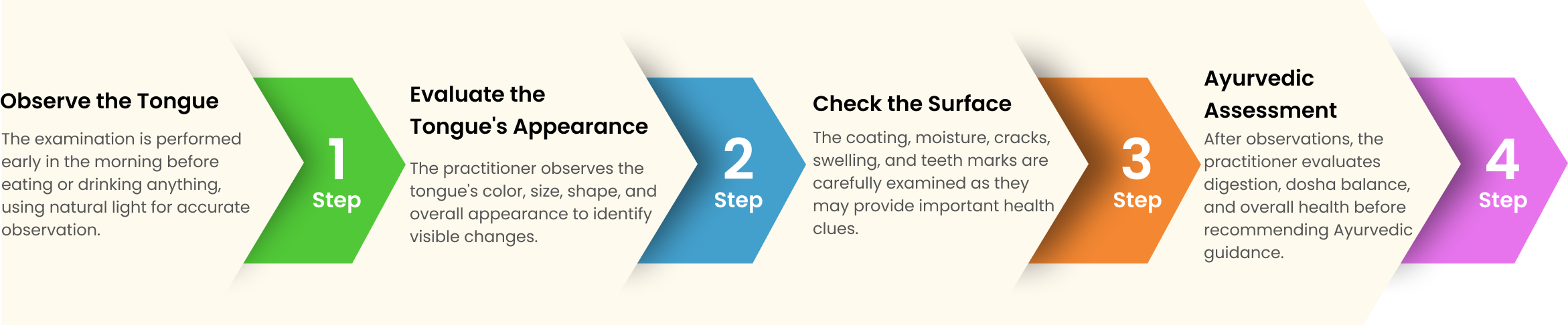
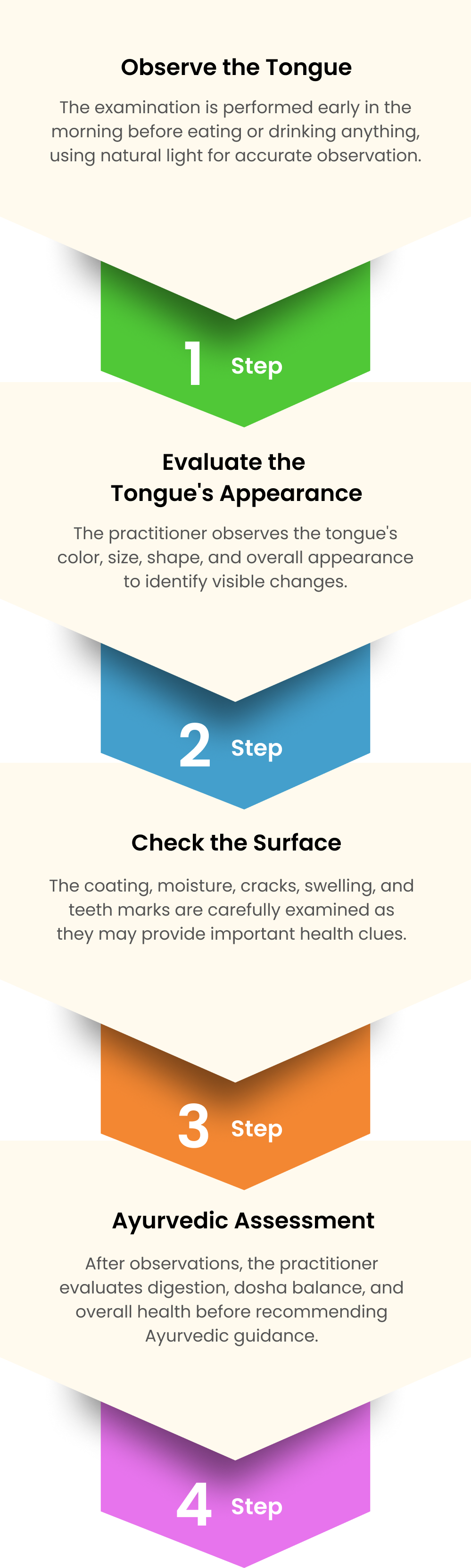
How is Tongue Examination
Performed?
Why is Tongue Examination
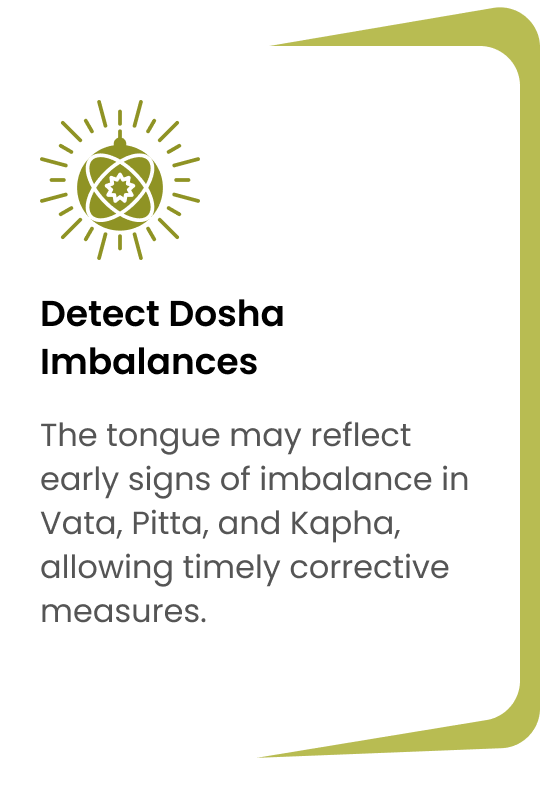
Important in Ayurveda?



Understand Your Doshas Through
Tongue Examination
What your tongue may reveal about your body's natural balance
The tongue's appearance can provide useful indications of the body's dosha balance. These observations are intended for general awareness and should always be interpreted by a qualified Ayurvedic practitioner.
Vata Dosha

Light pink tongue with
visible cracks
Common Signs
- Dry tongue
- Fine cracks
- Rough texture
- Reduced moisture
Pitta Dosha

Bright red
tongue
Common Signs
- Redness
- Burning sensation
- Yellow coating
- Increased sensitivity
Kapha Dosha

Pale tongue with a thick
white coating
Common Signs
- Thick white coating
- Pale appearance
- Excess moisture
- Feeling of heaviness
Self Check Your Tongue
Take a closer look at your tongue and observe these common signs.

What color is your tongue?
A healthy tongue is generally pink, while unusual colors may indicate an imbalance.
Is there a white or yellow coating?
A thick coating may suggest digestive disturbances or toxin accumulation.
Are there visible cracks?
Cracks may be associated with dryness or Vata imbalance.
Do you notice teeth marks on the sides?
Teeth marks may indicate weakened digestion or Kapha imbalance.
Is your tongue dry or excessively moist?
The moisture level of the tongue provides important clues about the body's internal balance.
Begin Your Panchakarma Journey Today
Balance your Vata, Pitta, and Kapha through personalised Panchakarma guided by the wisdom of Ayurveda and the healing philosophy of Acharya Manish ji.

Frequently Asked Questions
Can tongue examination diagnose every disease?
When is the best time for tongue examination?
Can my tongue change from day to day?
Is tongue examination painful?
Why is tongue examination important in Ayurveda?

Discover your true Ayurvedic constitution with the wisdom of Acharya Manish Ji. At Jeena Sikho HiiMS, we help you restore Dosha balance through personalised natural healing, empowering your body to achieve lasting health, vitality, and overall well-being.


Company
©Copyrights 2026 Jeena Sikho HiiMS. All Rights Reserved.


