Discover your Dosha.
Understand your body.
Make better food choices.
Your Body Is Unique. Your Diet Should Be Too.
Ayurveda believes that no two people are exactly alike. Your Prakriti, or natural body constitution, is influenced by three Doshas: Vata, Pitta, and Kapha. These Doshas are associated with different qualities and can influence digestion, appetite, energy levels, and how your body responds to food and lifestyle.
A personalised Ayurvedic diet focuses on choosing foods that are suitable for your constitution rather than following the same diet as everyone else.
VATA

Warm, Nourishing & Grounding
Vata is made up of the elements air and space. It is associated with movement, activity, and flexibility. People with a Vata-dominant constitution may naturally prefer lighter foods, but an excess of Vata can be associated with dryness, irregular appetite, bloating, restlessness, and sensitivity to cold.
For Vata, meals are generally better when they are warm, freshly prepared, moist, and nourishing. Eating at regular times can also help maintain a steady routine.
Foods That Suit Vata
Grains

Grains
Rice, wheat, oats, barley, and other light, well-cooked grains.
Vegetables
Vegetables
Cucumber, leafy greens, zucchini, broccoli, cauliflower, asparagus, and other fresh vegetables.
Fruits
Fruits
Pomegranate, pears, apples, grapes, melons, coconut, and naturally sweet seasonal fruits.
Pulses & Legumes
Pulses & Legumes
Moong dal, lentils, and other suitable legumes prepared with mild spices.
Healthy Fats
Healthy Fats
Ghee and coconut are commonly included in moderate quantities.
Herbs & Mild Spices
Herbs & Mild Spices
Coriander, fennel, mint, cardamom, and fresh herbs can add flavour without making meals excessively spicy.
Better to Limit

Heavy Fried
Foods

Very Oily
Meals

Frequent
Snacking

Cold Foods
and Drinks

Excessive
Sweets

Large
Portions

Highly Processed
Foods

Vata Meal Idea
A warm bowl of vegetable khichdi with a little ghee, followed by a serving of ripe seasonal fruit, can make a comforting meal for a Vata constitution.

Vata Food Philosophy
Keep it warm. Keep it nourishing. Keep your routine steady.
PITTA

Fresh, Cooling & Naturally Balanced
Pitta is associated with the elements fire and water. It is linked with digestion, metabolism, and the body's natural heat. When Pitta is elevated, some people may experience a tendency towards feeling hot, acidity, irritation, or digestive discomfort.
A Pitta-friendly diet generally favours fresh, hydrating and mildly seasoned foods. Meals should be nourishing without being excessively spicy, oily, or heavy.
Foods That Suit Pitta
Grains
Grains
Rice, wheat, oats, barley, and other light, well-cooked grains.
Vegetables
Vegetables
Cucumber, leafy greens, zucchini, broccoli, cauliflower, asparagus, and other fresh vegetables.
Fruits
Fruits
Pomegranate, pears, apples, grapes, melons, coconut, and naturally sweet seasonal fruits.
Pulses & Legumes
Pulses & Legumes
Moong dal, lentils, and other suitable legumes prepared with mild spices.
Healthy Fats
Healthy Fats
Ghee and coconut are commonly included in moderate quantities.
Herbs & Mild Spices
Herbs & Mild Spices
Coriander, fennel, mint, cardamom, and fresh herbs can add flavour without making meals excessively spicy.
Better to Limit
Excessive Fried
Foods
Very Spicy
Foods
Very Sour
Foods

Excessive Caffeine

Alcohol
Highly Salty
Foods
Very Hot
Meals
Pitta Meal Idea
A meal of rice, lightly cooked green vegetables, moong dal, and fresh coriander can provide a simple and refreshing combination.
Pitta Food Philosophy
Keep it fresh. Keep it mild. Give your body room to stay cool and comfortable.
KAPHA

Light, Warm & Energising
Kapha is associated with the elements earth and water. It is linked with stability, strength, and nourishment. When Kapha becomes excessive, some people may feel heavy, sluggish, or less energetic.
For Kapha, meals are generally better when they are light, warm, freshly prepared, and moderately portioned. Variety and mindful eating can also help prevent meals from becoming unnecessarily heavy.
Foods That Suit Kapha
Grains
Grains
Barley, millet, buckwheat, quinoa, and other lighter grains.
Vegetables
Vegetables
Leafy greens, cabbage, cauliflower, radish, beans, bitter vegetables, and other lightly cooked vegetables.
Fruits
Fruits
Apples, pears, pomegranate, berries, and other lighter seasonal fruits.
Pulses & Legumes
Pulses & Legumes
Moong dal, lentils, chickpeas, and other suitable legumes in appropriate portions.
Healthy Fats
Healthy Fats
Use oils and ghee in moderation, according to individual needs.
Herbs & Mild Spices
Spices & Herbs
Ginger, black pepper, cumin, turmeric, cinnamon, and other warming spices can add flavour to meals.
Better to Limit
Very spicy
foods
excessive fried
foods
very sour
foods
excessive caffeine
alcohol
highly salty foods
Very Hot
Meals
Kapha Meal Idea
A bowl of warm vegetable soup with lightly cooked vegetables and a small portion of millet or moong dal can make a lighter meal option.
Kapha Food Philosophy
Choose light foods. Add warmth. Keep moving. Eat with awareness.
One Diet Does Not
Fit Everyone
Ayurveda does not look at food as simply good or bad for everyone. A food that feels suitable for one person may not have the same effect on another person. Your Prakriti, current Dosha balance, digestion, age, lifestyle, season, and individual health needs can all influence your dietary requirements. That is why understanding your Dosha can be a useful first step towards making more personalised food choices.
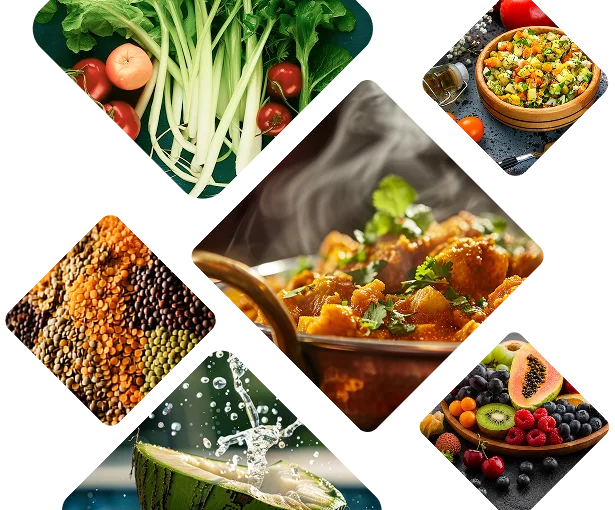
Know Your Prakriti

Understand
Your Dosha

Choose
Suitable Foods

Build Better
Eating Habits

Disclaimer: Ayurvedic dietary recommendations should be personalised according to individual needs. If you
have
a medical condition or are taking medication, consult a qualified healthcare professional before making
major dietary changes.

Discover your true Ayurvedic constitution with the wisdom of Acharya Manish Ji. At Jeena Sikho HiiMS, we help you restore Dosha balance through personalised natural healing, empowering your body to achieve lasting health, vitality, and overall well-being.


Company
©Copyrights 2026 Jeena Sikho HiiMS. All Rights Reserved.


