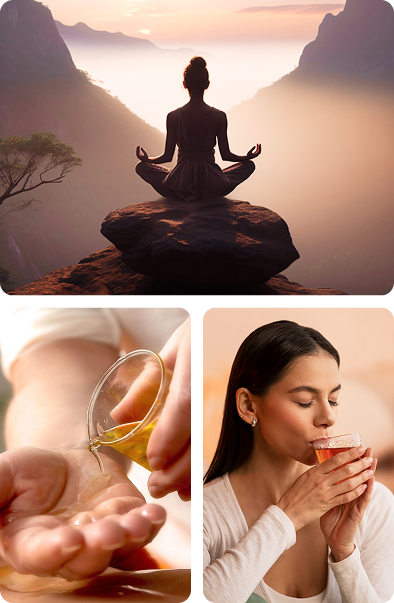
What is Vata Dosha?
Vata is one of the three fundamental Doshas in Ayurveda. It is formed by the combination of the Air and Space elements and is responsible for all movement in the body.
Vata Governs:
-
 Breathing and Circulation
-
 Movement of Muscles and Joints
-
 Elimination of Waste
-
 Nervous System Functions
-
 Speech and Communication
-
 Creativity and Mental Activity
People with a dominant Vata constitution are often energetic, imaginative, quick learners, and naturally enthusiastic.




























 Wake up and sleep at consistent times.
 Avoid excessive screen time before bed.
 Eat warm meals at regular intervals.
 Engage in calming yoga or meditation.
 Stay hydrated with warm water.
 Avoid too much cold and wind.
 Practice self-oil massage regularly.