

Feeling heavy in the morning, catching colds often, or gaining weight even though you eat the same food as before? Many people put this down to age or a busy routine. In Ayurveda, these changes are often linked to kapha dosha imbalance. In this blog, we explain the early signs, the usual causes, and simple ways to bring daily habits back in line.
We also share what studies have looked at, and how Healing with Acharya Manish Ji approaches dosha guidance. This is general information, not a diagnosis, so please speak to a doctor if a symptom stays for more than a few weeks.
What is Kapha Dosha in Ayurveda?
Ayurveda describes three doshas: Vata, Pitta and Kapha. Kapha is linked with the earth and water elements. Classical qualities listed for it include heavy, cold, soft, oily, sweet and stable from Ayurvedic texts.
In simple terms, Kapha looks after structure, lubrication and fluid balance. When it is in a steady state, people usually describe:
- Steady energy and good stamina
- Calm mood and a good memory
- Smooth, well-moisturised skin
- Strong joints and a good immune response
Problems start when Kapha builds up beyond its usual level. Ayurveda also separates two ideas: Prakriti, your natural constitution, and Vikriti, your current state. A person can have a Kapha-leaning Prakriti and still show a different imbalance at present.
That is why a quiz result alone is only a starting point, and why a trained Ayurvedic doctor also looks at pulse, tongue and body build.
Want to understand your unique body constitution? Take the Prakriti Parikshan today.
Kapha Dosha Symptoms: What You May Notice
Kapha symptoms are easy to miss because they build up slowly. They usually fall into two groups.
In the body:
- Weight gain and a slow metabolism
- Sluggish digestion and heaviness after meals
- Water retention or puffiness
- Extra mucus, a blocked nose or a wet cough
- Low energy, even after a full night’s sleep
- Oily or cold, clammy skin
In the mind and mood:
- Low motivation and a dull, foggy feeling
- Strong attachment to routine and a dislike of change
- Emotional dependence or withdrawal
- Wanting to be alone
These physical and emotional signs add lethargy, reduced appetite and cough from older texts such as the Rasa Jala Nidhi. Please keep in mind that many of these Kapha dosha symptoms also appear in thyroid problems, diabetes, sleep problems and allergies. A symptom list is not a test.
Signs of Kapha Dosha Imbalance That Show Up Early
Early signs are usually small habits rather than big complaints. These are the ones worth noticing:
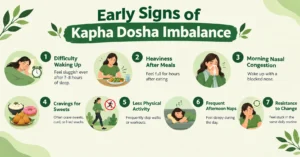
- You take a long time to wake up, even after seven or eight hours of sleep
- A normal meal leaves you feeling full for hours
- Your nose is blocked in the morning and clears later in the day
- You crave sweets, curd or fried snacks in the evening
- You skip a walk or a workout “just for today” many days in a row
- You nap in the afternoon more than before
- You feel stuck and don’t want to change anything in your routine
One thing I notice when people describe their routine is that late dinners and daytime naps usually come before the weight change, not after it. If three or four of the points above feel familiar for a month or more, it makes sense to look at your daily habits. The signs of Kapha dosha imbalance are also easier to handle at this stage than later, when weight, sugar or cholesterol numbers have already moved.
Causes of Kapha Dosha Imbalance
Most causes are food, routine, season and emotions. Nothing in the list below is unusual, which is why the pattern is common.
Food habits
- Frequent sweet, oily, fried or dairy-heavy meals
- Cold or heavy food, and drinks straight from the fridge
- Eating more than your hunger needs
- Late, heavy dinners
- Too many sour, salty and sweet tastes, which WisdomLib notes as traditional triggers for Kapha
Daily routine
- Waking late and sleeping during the day
- Long hours of sitting
- Not much physical movement
Season and weather
- Cold, damp weather
- Late winter into spring.
- People crave rich, sweet and salty foods in cold weather, and this can add to Kapha build-up.
Mind and emotions
- Holding in emotions
- Strong attachment to comfort and routine
- Eating when stressed or bored
Most people experience these causes of Kapha dosha imbalance have two or three of these at once, so it helps to change one habit at a time instead of everything in a week.
Not sure which habits may be affecting your Kapha balance? Book a consultation with us for personalised guidance.

Kapha – Metabolic Health and Prakirti
Ayurveda connects Kapha build-up with weight gain, mucus and sluggish metabolism. Modern research has not tested “Kapha” directly in large trials, but some numbers and small studies are relevant.
A 2022 study in the journal Diseases compared 112 people with type 2 diabetes and 112 without it at Banaras Hindu University. Most of the diabetes group was Kapha (60) or Pitta (51) type, and the Kapha group had higher weight, BMI, waist-hip ratio, blood sugar and cholesterol. It was a single-region study, so it shows an association and nothing more.
These numbers are not about Kapha, but they show why heaviness, weight gain and sluggish metabolism are worth taking seriously.
A 2015 Ayurgenomics study in the Journal of Translational Medicine tested 96 healthy people of extreme Prakriti types and found differences in seven genes. The authors call the findings preliminary.
In short, these studies are small and mostly observational. They suggest that Kapha-type constitution and metabolic health may be connected, but they do not show that Kapha imbalance causes any disease. The Ministry of Ayush also launched the Desh Ka Prakriti Parikshan Abhiyan in October 2024, which shows how widely Prakriti is now being used for health awareness in India.
How to Balance Kapha Dosha: Food, Routine and Movement
Ayurveda’s general approach is to bring in lightness, warmth and movement, the opposite of Kapha’s qualities. Here is a practical way to start.
Food
- Choose warm, light, freshly cooked meals
- Include leafy greens, lentils, beans, apples and pears
- Use ginger, turmeric and other warming spices in cooking
- Prefer greens, berries, peas, barley, quinoa and millet
- Eat whole millets and seasonal fruit
- Cut back on fried food, sugary drinks, heavy dairy and processed snacks
- Stop eating when you are comfortably full
Daily routine
The Dincharya suggests this kind of day:
- Wake up early, roughly between 4:30 and 6:00 AM
- Drink warm water before eating
- Do yoga and deep breathing in morning sunlight
- Walk barefoot on grass
- Have fruit first, then a light cooked breakfast
- Finish dinner around sunset so digestion is done before bed
The page also mentions chewing raw turmeric, curry leaves and a small piece of ginger on an empty stomach. This may not suit everyone, especially people with acidity or those on regular medicines, so please ask your doctor first.
Movement
- A brisk walk in the morning, when Kapha feels heaviest
- Yoga that raises body heat, such as sun salutations
- Kapalabhati breathing, but only after checking with a qualified teacher or doctor if you have high blood pressure or a heart condition
Mind and mood
- Stay socially active and try something new every few weeks
- Notice when you eat out of boredom or stress
- Keep a regular routine, but allow small changes
Simple traditional practices
- Udvartana (dry powder massage) and Gandusha (oil pulling), both listed on Ayurvaid
- Neti with a little nasya oil afterwards for seasonal allergies, but not during an active sinus infection, as Kripalu notes
Most people find how to balance Kapha dosha easier when they start with one change, such as an earlier dinner or a 20-minute morning walk, and add the next one after two weeks.
Want a plan that fits your routine? Speak to the Dosha Expert

When Should You See a Doctor?
Ayurveda-based habit changes are not a substitute for a medical check. Many features of Kapha dosha imbalance look the same as signs of other conditions, so please see a doctor if you notice:
- Weight gain with constant tiredness, cold intolerance or hair thinning, which may point to thyroid problems
- Increased thirst, frequent urination or slow-healing cuts, which may relate to blood sugar
- Swelling in the feet or face
- A cough or breathlessness that lasts more than a few weeks
- Loud snoring with daytime sleepiness
A basic set of tests, such as blood sugar, thyroid profile and lipid profile, is a good starting point. If you are on medicine, please do not stop it on your own. Share what you are trying with your doctor, so both approaches can work together.
How Ayurveda Approaches Kapha-Related Concerns
Ayurveda works on root cause not just managing symptoms. Based on the HiiMS site and press coverage, its approach has four parts:
- Diet: the diet and the plant-based, pH-balanced diet Acharya Manish Ji speaks about, which fits well with the light-food advice for Kapha
- Herbal support: Ayurvedic herbs such as Ashwagandha, Guduchi, Turmeric and Manjistha are used
- Therapies: Panchakarma and natural therapies, with the GRAD system (hot water immersion, head-down tilt therapy and the pH-balanced diet) as reported by The Tribune.
- Lifestyle: yoga, meditation, sunlight, and a regular daily routine
For someone dealing with Kapha dosha imbalance, the usual first step is a dosha assessment and a talk with the doctor about food, sleep and current health reports. These are also the points a good Ayurvedic consultation should cover, wherever you take it.
Conclusion
Kapha dosha imbalance rarely begins with a diagnosis. It usually starts with heavy mornings, slow digestion and a routine that has not changed in years. Understanding Kapha dosha in Ayurveda, noticing the early signs, and changing one or two habits can be a practical start. Please remember that studies on Kapha are small, that many symptoms overlap with other conditions, and that your doctor’s advice comes first.
If you want a guided look at your dosha, diet and daily routine, you can book a video consultation with Healing with Acharya Manish Ji.

FAQs
1. What is the first sign of Kapha dosha imbalance?
Heaviness in the morning, slow digestion and a blocked nose are often the first things people notice.
2. Can Kapha dosha imbalance cause weight gain?
In Ayurveda, yes, it is linked with weight gain and slow metabolism. Weight can also change due to thyroid, sugar and other medical reasons, so get tested.
3. Which foods are good for Kapha?
Warm, light and freshly cooked foods such as leafy greens, lentils, millets, apples, ginger and turmeric are usually suggested.
4. Is morning exercise useful for Kapha?
Ayurveda suggests brisk walking or yoga in the morning. Please check with your doctor first if you have a heart condition or high blood pressure.
5. Can I follow Ayurvedic routines along with my medicines?
Many people do, but please tell your doctor first and do not stop prescribed medicines on your own.
Disclaimer: The information provided on this blog is for general educational and informational purposes only. It is not intended to replace professional medical advice, diagnosis, or treatment. Always consult a qualified healthcare professional before making any changes to your diet, lifestyle, or treatment plan. Individual results may vary.