Author: healingwithacharya
October 03, 2026
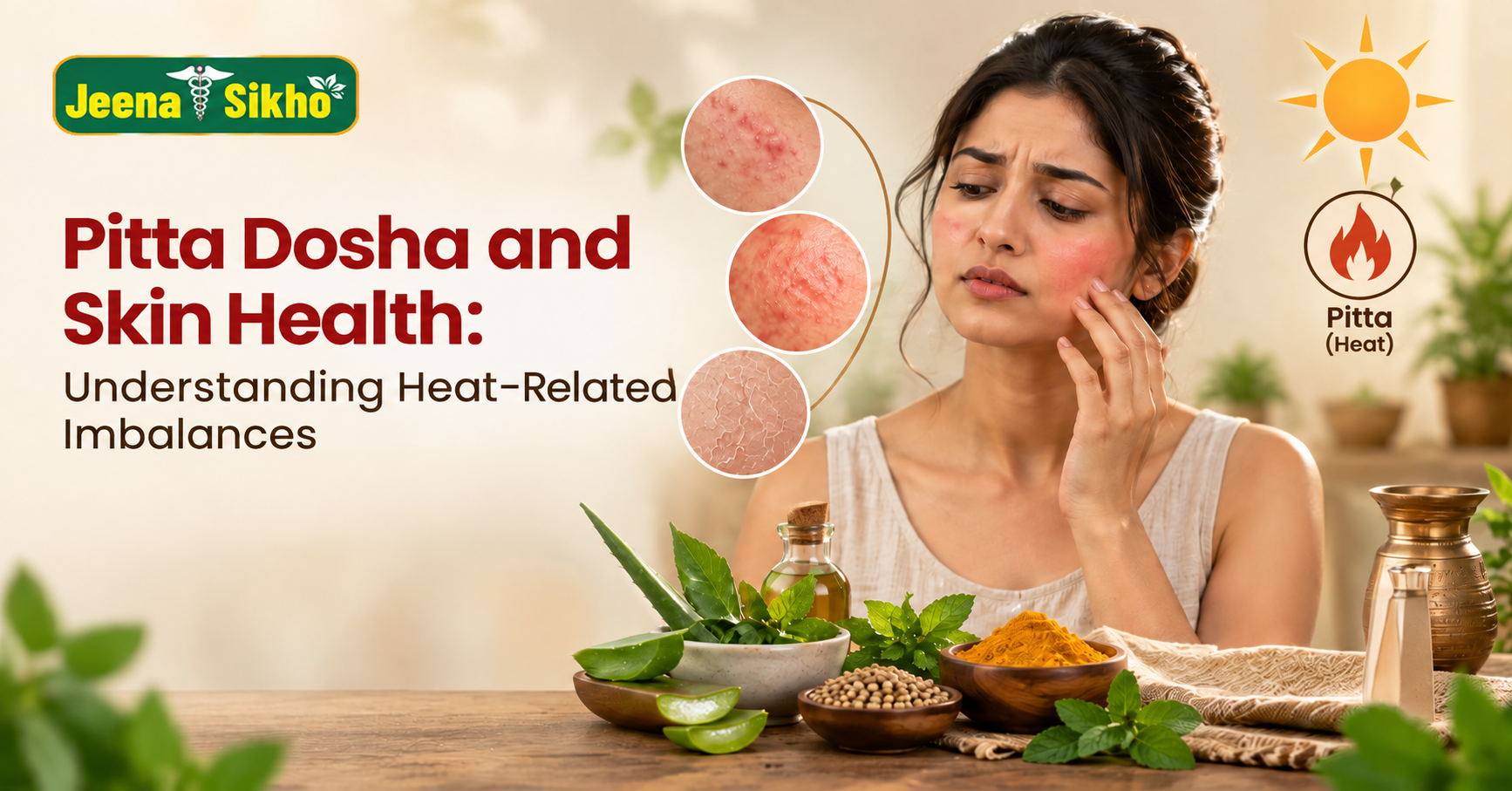
Have you ever seen your skin turn red or break out when the weather gets hot? Maybe a rash shows up after a spicy meal. Maybe your skin burns and itches when you feel stressed. Most people brush these signs off. Ayurveda sees them as signals of too much heat in the body, linked to Pitta.
This link is not only an old belief. A study by Umarkar and team in the journal Ayu checked skin hydration in healthy young women of different body types. About 70% of those with a Pitta-dominant body type had lower skin hydration. It was a small study, but it shows that skin can differ by body type. This blog explains Pitta Dosha and Skin Health in simple words, so you can spot the signs early.
What Is Pitta Dosha?
Ayurveda says three energies called ‘doshas’ run the body: Vata, Pitta, and Kapha. Pitta is made of fire and water. It controls heat, digestion and metabolism. Think of it as the body’s inner fire.
When Pitta is balanced you feel energetic and your skin looks healthy. Traditional texts describe the Pitta body type as lean or medium built, with fair or slightly reddish skin. These people often have a strong appetite and strong digestion, and they get warm easily. These are general traits, and every person is different.
Not sure about your dosha? Talk to our Ayurvedic expert and understand your body type.

How Pitta Dosha and Skin Health Are Connected
Ayurveda links skin closely with Pitta. It also links skin with Rakta Dhatu, which means blood tissue. The idea is simple. When the body holds too much heat, it can show on the skin.
Digestion matters too. Ayurveda believes weak or overheated digestion can affect the blood and skin. So Ayurvedic care looks beyond creams. It also looks at food, sleep, and stress.
If your skin keeps flaring up, your daily habits may need a closer look.
Common Causes of Pitta Dosha Imbalance
Pitta does not go out of balance overnight, it builds up slowly through daily habits. Common triggers include:
- Too much spicy, sour, salty or fried food
- Long hours in the sun or heat
- Stress, anger, and constant pressure
- Overwork and too little rest
- Too much tea, coffee, alcohol, or smoking
If you repeat these habits for weeks or months, the extra heat may begin to show in your body and skin.
Pitta Imbalance Symptoms on the Skin
Here are the skin signs often linked to too much Pitta.
Redness and Inflammation
Skin may look red, feel warm or get puffy; sun and heat often make it worse.
Acne and Pimples
Red, painful pimples can be a sign of excess heat. They may show up more in summer or when stressed.
Rashes, Hives and Itching
Some people get rashes that itch and burn, these often appear after spicy food or heat.
Burning Feeling and Sun Sensitivity
Skin may burn easily in the sun. Some people feel a hot, stinging feeling on the face or body.
Heavy Sweating and Body Odour
Pitta types often sweat more. This can lead to strong body odour and skin irritation.
Other body signs may also appear such as acidity, feeling overheated, and a short temper.
Skin problems that keep coming back? Get a personal Ayurvedic check. Talk to Our Experts today!

Natural Ayurvedic Ways to Balance Pitta
Small daily changes can help cool the body. Here are simple Ayurvedic ways to balance Pitta and support Skin Health.
Cooling Diet
Choose cooling foods like ghee, milk, leafy greens and cucumber. Eat less spicy, sour, fried, and processed food. Eat your meals on time.
Herbal Support
Cooling herbs like aloe vera, neem, sandalwood, and amla are traditionally used to calm extra heat in the body. Many people use them in food, drinks, or skin care. Check with an Ayurvedic doctor before starting any herb, especially if you take other medicines.
Daily Routine
Avoid the harsh midday sun. Drink enough water throughout the day. Go to bed on time, as good sleep supports the body’s healing.
Stress Care
Stress adds heat to Pitta. Try meditation, slow breathing or a quiet walk in nature for a few minutes every day.
Gentle Skincare
Skip harsh soaps and strong chemical products. Use mild, cooling care for your skin.
What Research Says About Pitta-Balancing Therapies
Panchakarma is a set of Ayurvedic cleansing therapies. One of them is Virechana, a guided cleansing of the gut using herbal medicines. A 2025 review by Matre and team in the Journal of Pharmacognosy and Phytochemistry describes Virechana as a key method to remove extra Pitta. The review also says it has been traditionally used for skin diseases.
However, this is a review and not a clinical trial. More studies are needed. Such therapies should also be done only under an expert’s guidance.
Healing Pitta From Within: Why Personalised Care Matters
Ayurveda separates two things. Prakriti is your natural body type. Vikriti is your current imbalance. Care works to fix the Vikriti. This is why two people with the same skin problem may get different advice.
At Healing with Acharya Manish, care starts with understanding you. A proper consultation looks at your digestion, sleep, stress, food habits, and skin together. Then a plan is made just for you. It may include cleansing therapies like Panchkarma, diet changes, herbs and calming practices.
Lasting results usually come from following such a plan steadily, not from one quick fix. Results can differ from person to person. This whole-body view is the heart of Pitta Dosha and Skin Health care.
Conclusion
Your skin often shows what is going on inside. Redness, pimples, rashes, and burning are signs to slow down and look at your habits. Cooling food, good rest, less stress, and the right guidance can make a real difference to Pitta Dosha and Skin Health.
See a doctor if a rash spreads fast, feels painful, comes with fever or does not improve in a couple of weeks. If your face or lips swell or you have trouble breathing, get expert help right away.
Book your Prakriti Parikshan at Healing with Acharya Manish today to know your body type.

FAQs
1.What are the common signs of Pitta imbalance on the skin?
Redness, pimples, itchy rashes and a burning feeling are common signs. Skin may also get sensitive to the sun and sweat more.
2.Can Pitta Dosha cause acne?
Ayurveda links too much heat in the body to acne and pimples. Stress, spicy food and poor sleep are often seen as triggers.
3.Which foods help balance Pitta?
Cooling foods like ghee, milk, leafy greens and cucumber are traditionally suggested. It also helps to eat less spicy, sour, and fried food.
4.How do I know if I have a Pitta body type?
Pitta types often feel warm, have a strong appetite and get irritated easily in the heat. An Ayurvedic expert can confirm your body type properly.
5.When should I see a doctor for skin problems?
See a doctor if a rash spreads fast, feels painful, comes with fever or does not improve in a couple of weeks. Get help right away if your face or lips swell or you have trouble breathing.
Disclaimer: The information provided on this blog is for general educational and informational purposes only. It is not intended to replace professional medical advice, diagnosis, or treatment. Always consult a qualified healthcare professional before making any changes to your diet, lifestyle, or treatment plan. Individual results may vary.