

If you get hungry and irritable at the same time, feel burning in your stomach after spicy food, or find that summer leaves you red-faced and short-tempered, you may be wondering what is going on. Ayurveda would point to Pitta Dosha, the fire-and-water energy linked with digestion and body heat.
In this blog, we explain what it is, which symptoms to watch for, why summer makes it worse, and seven simple tips to keep it in balance.
What is Pitta Dosha?
Ayurveda describes three doshas: Vata, Pitta and Kapha. Pitta is formed from the fire and water elements. According to the Pitta page on Healing with Acharya Manish Ji, it looks after:
- Digestion and appetite
- Metabolism and body temperature
- Hormones and skin health
- Vision, focus and decision-making
When Pitta Dosha is balanced, people tend to have strong digestion, a sharp mind, steady energy, clear skin and a calm, confident mood. People with a Pitta-leaning constitution are often described as focused, ambitious and natural leaders.
So if you are asking what is Pitta dosha in simple words, it is the body’s heat and digestion energy. Ayurveda also separates Prakriti (your natural constitution) from Vikriti (your current state), so a Pitta type can still show a different imbalance at present.
Curious about your dosha type? Take the dosha quiz on Healing with Acharya Manish Ji.
Pitta Dosha Symptoms You May Notice
Pitta Dosha problems are usually about heat, in the body and in the mood. The site lists these signs:
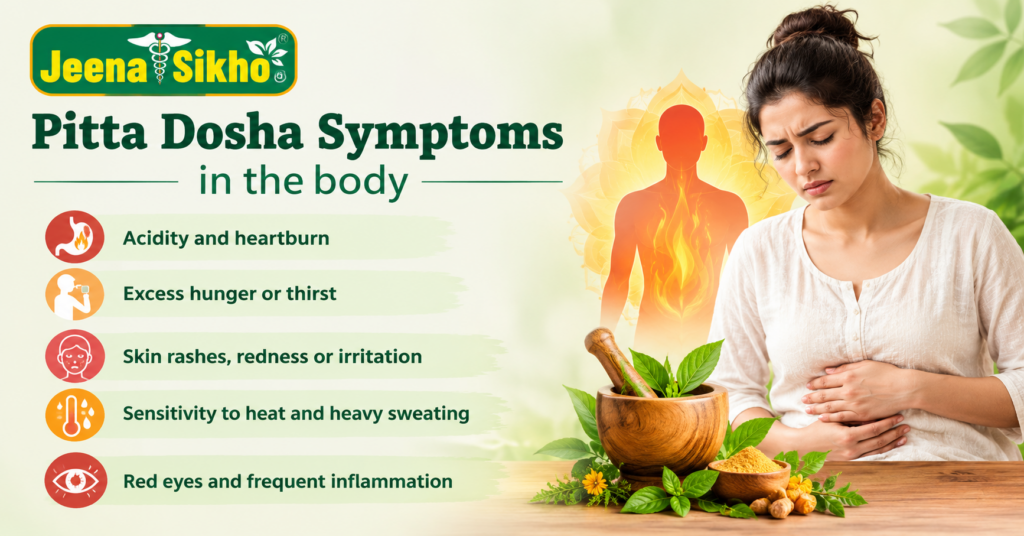
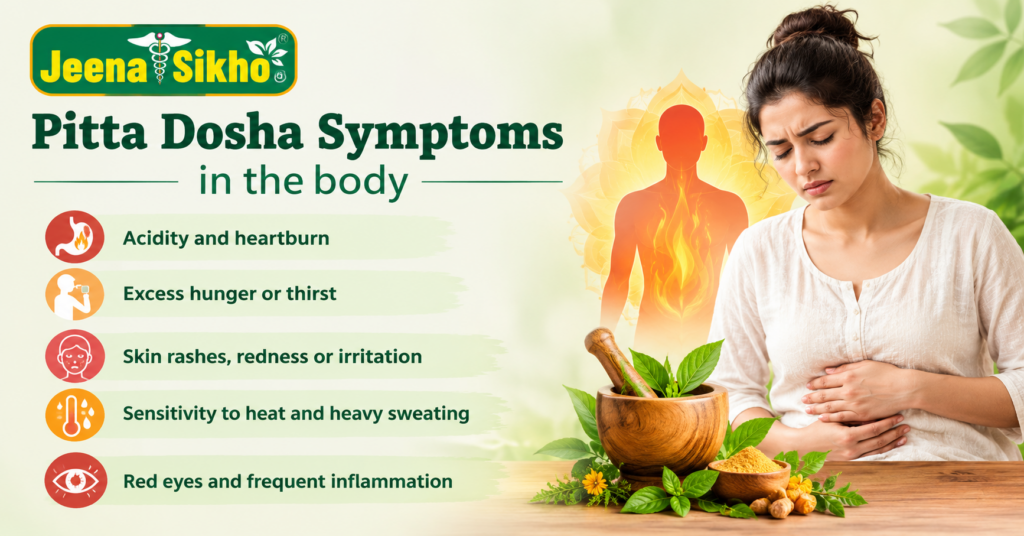
In the body
- Acidity and heartburn
- Excess hunger or thirst
- Skin rashes, redness or irritation
- Sensitivity to heat and heavy sweating
- Red eyes and frequent inflammation
In the mind
- Irritability, anger and impatience
- Perfectionism and a short temper
- Being very competitive
- Difficulty relaxing
If the imbalance continues for a long time, Ayurveda links it with gastric trouble, skin problems, migraine and stress-related issues. These Pitta dosha symptoms overlap with ordinary medical conditions, so a symptom list should not replace a check-up.
Acidity is a good example. The Indian Society of Gastroenterology’s 2019 consensus statement says reflux disease (GERD) affects an estimated 7.6% to 30% of adults in India, depending on the study. A population study in Ladakh found symptomatic GERD in 18.7% of 905 adults.
These figures are not about Pitta as such, but acidity is among the most common Pitta complaints. One thing I notice every summer is that acidity and a short temper tend to show up in the same few weeks.
Pitta Dosha During Summer
Pitta shares its hot qualities with summer, so it tends to build up as temperatures rise. A Kripalu article on balancing Pitta in summer lists skin rashes and acne, burning or red eyes, acid indigestion, nausea, loose stools, and also anger and impatience as common summer signs.
The heat itself is a real health issue in India. Reuters, as carried by Deccan Herald, reported nearly 25,000 suspected heatstroke cases and 56 deaths from March to May 2024. In 2025, data from the National Centre for Disease Control obtained under RTI showed 7,192 suspected cases and 14 deaths from March 1 to June 24. The numbers differ by year and by how cases are counted, but both point the same way: summer asks more of your body.
Ayurveda’s summer routine, called Grishma Ritucharya, suggests rising early, doing gentle exercise before mid-morning, and choosing cool, light food and drinks such as coconut water and lassi, as a Healing Holidays article explains.
7 Tips: How to Balance Pitta Dosha
Here is a practical list. You do not need to start all seven on the same day.
1. Choose cooling foods
Healing with Acharya Manish Ji suggests fresh fruits, leafy greens, coconut water, cucumber, melons, whole grains and cooling herbal teas. Kripalu adds sweet apples, ripe bananas, watermelon and cilantro.
2. Cut back on aggravating foods
Spicy, fried, very salty, sour and fermented foods, plus coffee and alcohol, are the usual triggers listed.
3. Do not skip meals
Long gaps with an empty stomach can add to acidity and irritability. Try to eat at regular times.
4. Stay hydrated and avoid the midday sun
Keep water or coconut water with you. If you are heat-sensitive, a thin layer of coconut oil before a lukewarm shower and a rose-water spritz are two simple options from the Kripalu article.
5. Pick gentle exercise
A dawn walk, swimming or calm yoga suits Pitta better than intense workouts. Yoga Journal names HIIT, heavy lifting and long-distance running as activities that add heat.
6. Try cooling breath
Sheetali or Sitkari pranayama for five to ten minutes in the morning is a common suggestion. If you have a cold or a breathing condition, check with your doctor first.
7. Manage stress
Daily meditation, relaxing hobbies and a healthy work-life balance are on the site’s list. Most people find how to balance Pitta Dosha easier when they begin with one habit, for example regular meal times, and add the next one after two weeks.
Want a plan that fits your routine? Speak to the Dosha Expert at Healing with Acharya Manish Ji.
What Do Studies Say?
Research on Pitta Dosha itself is limited, and most of it is small. A 2015 pilot study in the European Journal of Integrative Medicine assessed 391 adults and compared Vata, Pitta and Kapha groups with Western personality measures.
The authors reported that the groups’ personality and health features were consistent with Ayurvedic descriptions. I did not find a trial that tests a Pitta-balancing diet directly, so please treat the tips above as traditional practice and general healthy habits, not proven treatment.
When Should You See a Doctor?
Signs of Pitta Dosha imbalance can look like medical problems, so please see a doctor if you have:
- Heartburn or acidity that lasts more than two weeks
- Trouble swallowing
- Unexplained weight loss
- Vomiting, or black stools
- Chest pain, which should always be checked urgently
- Skin rashes that keep coming back
If you would like a guided look at your dosha, diet and summer routine, take the quiz or book a consultation with Healing with Acharya Manish Ji.

Conclusion
Pitta Dosha is about heat, digestion and temper, and summer is when most people feel it. Understanding Pitta dosha during summer, noticing the early signs, eating cooling food at regular times, and making room for rest and gentle movement are simple places to start. Please keep your doctor in the loop, especially for acidity that does not settle.
FAQs
1. What is the main sign of high Pitta?
Heat-related complaints such as acidity, sweating, skin redness and a short temper are usually named first.
2. Which foods are good for Pitta?
Cooling foods like cucumber, melons, coconut water, leafy greens and whole grains are commonly suggested.
3. Why does Pitta increase in summer?
Summer is hot, and Pitta has similar qualities, so the two add up.
4. Can I do intense workouts with high Pitta?
Ayurveda suggests gentler exercise such as walking, swimming or yoga, especially in hot weather.
5. Is the dosha quiz enough to know my type?
No. It is a starting point, and a consultation gives a fuller assessment.
Disclaimer: The information provided on this blog is for general educational and informational purposes only. It is not intended to replace professional medical advice, diagnosis, or treatment. Always consult a qualified healthcare professional before making any changes to your diet, lifestyle, or treatment plan. Individual results may vary.