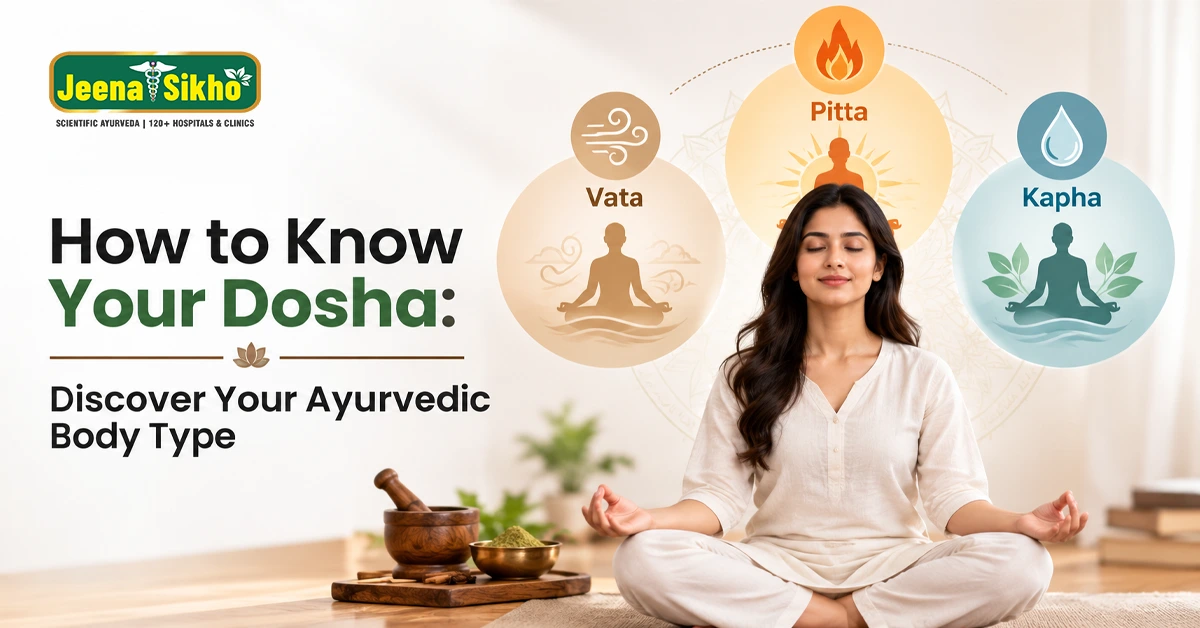

Have you ever wondered why some people feel fine in cold weather while others always look for warmth? Why does one person have a light body frame while another has a naturally strong build? Ayurveda explains such differences through the idea of dosha. It says every person has a unique body constitution, called Prakriti. This constitution links to three doshas: Vata, Pitta and Kapha.
Understanding your dosha helps you learn about your natural body patterns, eating habits and daily routine. It also shows why Ayurveda gives care based on the person, not one diet for everyone. A body type does not depend on looks alone. Digestion, sleep, energy and temperature needs also matter.
Learning how to know your dosha is a good first step into this old system of health. You do not need deep knowledge of Ayurveda to begin. A simple idea of the three doshas helps you spot their common signs. It also tells you when to ask a qualified Ayurvedic doctor for guidance.
How to Know Your Dosha Through Its Common Features
Ayurveda describes three basic patterns that shape how your body works. Most people carry all three, but one or two usually stand out.
Vata Dosha: The Principle of Movement
Vata comes from air and space. Ayurveda links it with movement, breathing and circulation.
- Body frame: Often light or slim
- Skin: May feel dry or rough
- Appetite: Changes from day to day
- Sleep: Light and easy to disturb
An irregular routine, cold weather and poor rest may disturb Vata. Regular meals and enough sleep help.
Pitta Dosha: The Principle of Change
Pitta comes from fire and water. Ayurveda links it with digestion and body heat.
- Body frame: Often medium
- Skin: Feels warm and may turn red easily
- Appetite: Strong and regular
- Comfort: Prefers cooler places
Hot weather and skipped meals may disturb Pitta. Enough water and regular meals help.
Kapha Dosha: The Principle of Stability
Kapha comes from earth and water. Ayurveda links it with strength, structure and smooth joints.
- Body frame: Often broad or strong
- Skin: Smooth or oily
- Appetite: Steady, with slow hunger
- Sleep: Deep
Daily activity and light meals suit most Kapha types. A calm nature or heavy frame alone does not prove Kapha.
Understand your body type better
What Is My Dosha? Read the Signs Together
Many people ask, “What is my dosha?” and look for one clear sign. Ayurveda does not work that way. It reads many features together.
A person may have a slim frame like Vata, strong hunger like Pitta and a calm mind like Kapha. This mix is common.
Your constitution is also different from a short change in health. A stressful week or a long trip may disturb your sleep and hunger. That does not change your natural body type.
How to Identify Your Dosha in Daily Life
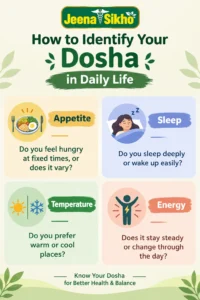
Watch your usual patterns when you feel well. Ask yourself these questions:
- Appetite: Do you feel hungry at fixed times, or does it vary?
- Sleep: Do you sleep deeply or wake up easily?
- Temperature: Do you prefer warm or cool places?
- Energy: Does it stay steady or change through the day?
Write down your answers over a few weeks. Do not judge yourself on a few odd days. This list will help you talk better with an Ayurvedic doctor.
Can an Ayurvedic Dosha Test Give You the Answer?
An Ayurvedic dosha test gives a good first idea of your main dosha, which helps you know your dosha. A study by Edwards and Streiner found repeat scores above 0.8 for Vata, Pitta and Kapha among 76 adults.
Still, a PubMed study notes that no standard questionnaire exists yet. So use a dosha quiz as a starting point, and let an Ayurvedic doctor confirm your body type through pulse, tongue and daily habits.
Ayurveda Body Types and Their Daily Care Needs
Once you know your main dosha, daily habits become easier to choose. This table shows what Ayurveda traditionally suggests for each type.
Care Area |
Vata |
Pitta |
Kapha |
| Food | Warm, cooked and moist meals | Cooling and fresh foods, less spice | Light and warm meals, less oil and sugar |
| Daily routine | Fixed meal and sleep times | Rest breaks, less time in heat | Early waking, no long daytime naps |
| Exercise | Gentle yoga and slow walks | Moderate activity, evening walks | Regular and brisk activity |
| Take extra care in | Cold and dry weather | Hot sun and skipped meals | Cold and damp weather |
These are general ideas. A qualified Ayurvedic doctor adjusts them for your age, health and season.
Ayurvedic Body Types: Facts and Research
These quick facts show how widely people study and use Ayurveda and the idea of body types.
- Ayurveda describes 3 doshas and 7 main body types, because doshas can mix in different ways.
- The Ministry of Ayush in India promotes Prakriti based care as part of traditional medicine.
- The World Health Organization reports that 170 member countries use some form of traditional medicine.
These facts show that knowing your body type is a serious and growing area of interest across the world.
How Doctors Understand Your Ayurvedic Body Type
In clinical practice, doctors often observe that people with the same complaint need very different care. Two people may both have acidity, yet one has a Pitta imbalance and the other has a Vata one.
Ayurvedic doctors usually begin by asking about your history, food habits, sleep and daily routine. They then check your pulse, tongue and body signs. This process helps them pick the right diet and therapy for you.
Conclusion
Learning how to know your dosha starts with the common signs of Vata, Pitta and Kapha. Watching your sleep, hunger and daily habits gives you a good start. No single sign or online quiz can confirm your body type with certainty.
You can have your Prakriti Parikshan with Acharya Manish Ji to understand your Ayurvedic body constitution better. This assessment may help you learn about your natural body patterns and suitable diet and lifestyle practices.
FAQs
Q1. What is my dosha, and how can I find it?
Check your body frame, hunger, sleep and energy over time, then confirm it with an Ayurvedic doctor.
Q2. What is Prakriti?
Prakriti is your natural body type, which Ayurveda says you carry from birth.
Q3. Can I have more than one dosha?
Yes, most people show a mix, with one or two doshas standing out more.
Q4. Is Ayurvedic care safe for everyone?
It suits many people, but you should use herbs only under a qualified doctor, especially during pregnancy or with ongoing illness.
Q5. Is an online dosha quiz reliable?
It works as a starting point, not as a final result.
Disclaimer: The information provided on this blog is for general educational and informational purposes only. It is not intended to replace professional medical advice, diagnosis, or treatment. Always consult a qualified healthcare professional before making any changes to your diet, lifestyle, or treatment plan. Individual results may vary.