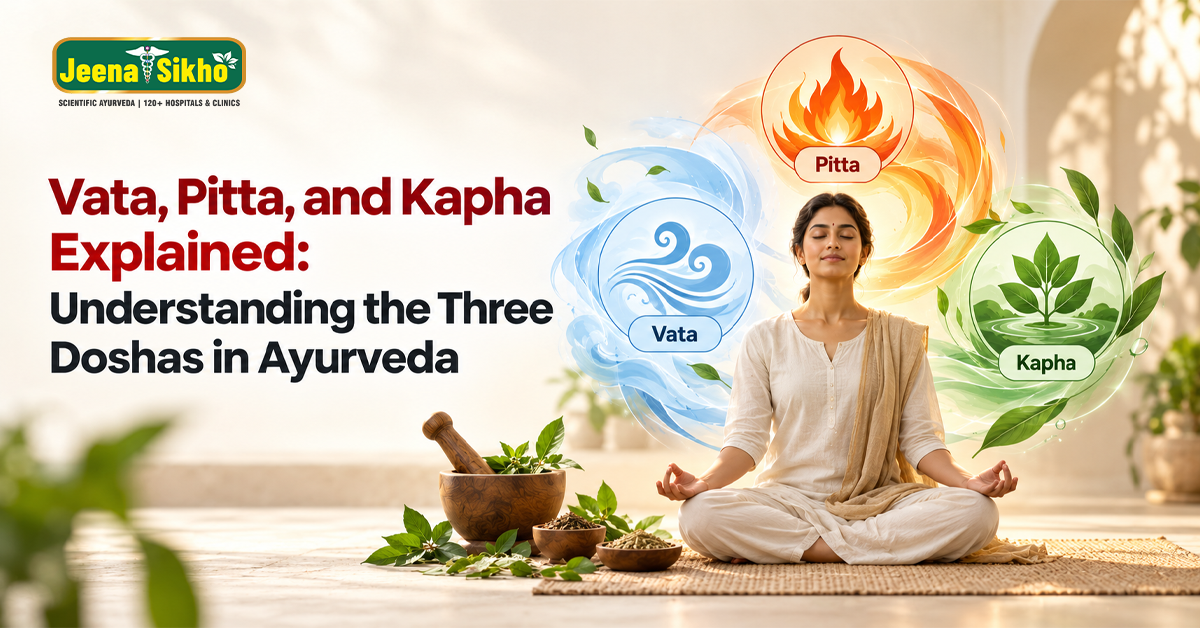

Have you ever wondered why one person always feels cold, another gets angry quickly, and a third gains weight easily? Ayurveda has a simple answer. It explains these differences through the three doshas in Ayurveda: Vata, Pitta and Kapha. Once you understand them, your body’s habits start to make sense.
Modern science is also exploring this idea. In a 2008 study by Indian scientists, researchers compared healthy people from the three most contrasting body types. They found clear differences in their blood tests, including liver function, cholesterol, and haemoglobin. Even their gene activity differed. This blog explains what each dosha does, how to spot an imbalance, and how to bring it back into balance.
What Are the Three Doshas in Ayurveda?
Ayurveda says everything in nature is made of five elements, called Panchamahabhuta. These are space, air, fire, water, and earth. Your body is made of the same five elements.
These elements combine to form three doshas. Doshas are the energies that run your body and mind. Vata controls movement, Pitta controls transformation, and Kapha gives structure.
Everyone has all three doshas. However the mix is different in each person. This unique mix shapes your body type, digestion, energy and even your personality. Let’s look at each dosha closely.
Curious which dosha shapes your body and mind? Talk to our Ayurvedic experts and learn more about your nature.

Types of Doshas in Ayurveda: Vata, Pitta and Kapha
Each dosha has its own elements, qualities, and role. When a dosha is in balance, it keeps you healthy. When a dosha is out of balance, specific problems arise.

Vata Dosha: The Energy of Movement
Vata is made of air and space. Its qualities are dry, light, cold and mobile. It controls everything that moves in the body, such as breathing, blood flow, nerve signals, and bowel movement.
People with more Vata usually have a slim build and a quick, creative mind, they learn fast but may forget fast too. An imbalanced Vata causes dry skin, constipation, joint pain, anxiety and poor sleep.
Pitta Dosha: The Energy of Transformation
Pitta is made of fire and water. Its qualities are hot, sharp, and intense. It controls digestion, metabolism and body temperature. In simple words, Pitta turns food into energy.
People with more Pitta usually have a medium build, a strong appetite and a sharp mind. They often make good leaders. However too much Pitta can lead to acidity, skin rashes, excess sweating, anger, and impatience. Hot weather and skipped meals often make these signs worse.
Kapha Dosha: The Energy of Structure
Kapha is made of earth and water. Its qualities are heavy, slow, stable, and moist. It builds the body’s structure, supports immunity and keeps the joints lubricated.
People with more Kapha usually have a sturdy build, a calm nature, and good stamina. They are loving and patient. When Kapha goes out of balance, it can cause weight gain, sluggishness, congestion and low motivation. Many Kapha people also feel heavy and sleepy after meals.
Prakriti and Vikriti: Your Natural Type vs Your Current State
Ayurveda focuses on two aspects. Your Prakriti is your natural body type. It forms at birth and stays the same for life. Vikriti is your current state. It changes with your diet, stress, sleep, and the season. For example, a Kapha person may develop Pitta problems like acidity during a stressful summer.
Ayurveda describes seven main Prakriti types. Three are single-dosha types: Vata, Pitta and Kapha. Three are dual types: Vata-Pitta, Pitta-Kapha and Vata-Kapha. The seventh is a rare balanced type, where all three doshas are equal.
Healing, in Ayurveda, means bringing your Vikriti back close to your Prakriti. So, what pushes the doshas off balance in the first place?
What Throws the Doshas Out of Balance?
Several everyday factors can disturb your doshas:

- Season: Each season raises a different dosha. Vata rises in dry, windy weather, Pitta in summer and Kapha in late winter and spring.
- Food: Eating against your nature disturbs balance. For instance, spicy food raises Pitta, while cold, heavy food raises Kapha.
- Daily routine: Irregular sleep and meal times confuse the body. This especially disturbs Vata.
- Stress and emotions: Worry raises Vata, anger raises Pitta, and attachment raises Kapha.
- Age: Kapha leads in childhood, Pitta in adulthood and Vata in old age. Therefore, your needs change as you grow older.
The good news is that small daily choices can bring the doshas back into balance.
How to Balance Vata, Pitta and Kapha Naturally
Ayurveda follows one simple rule: opposites balance each other. So, you calm a dosha by adding the opposite qualities.
Balancing Vata
Vata is cold and dry, so it needs warmth and moisture. Eat warm, cooked meals with a little ghee. Keep regular times for meals and sleep. A daily oil massage called Abhyanga calms the nerves and softens dry skin. Slow, grounding yoga poses also help.
Balancing Pitta
Pitta is hot and sharp, so it needs cooling and calming. Choose cooling food like coconut water, cucumber, sweet fruits, and buttermilk. Avoid spicy, fried and sour food. Stay out of the harsh midday sun. Cooling breathing practices like Sheetali pranayama help settle both the body and mind.
Balancing Kapha
Kapha is heavy and slow; therefore, it requires lightness and movement. Eat light, warm food with spices such as ginger, black pepper, and turmeric. Wake up early and don’t sleep during the day. Regular, active exercise, such as walking or doing surya namaskar, helps keep kapha from accumulating.
Why Knowing Your Dosha Matters for Healing
The same problem can have different roots in different people. For example, joint pain may come from dry Vata in one person and heavy Kapha in another. So, the right care depends on your dosha.
At Healing with Acharya Manish, care begins with understanding your Prakriti. Acharya Manish ji uses the wisdom of the three doshas in Ayurveda to plan care through four pillars. These are Aahar (diet), Vihar (lifestyle), Shaman (herbal support) and Shodhan (cleansing therapies). Every plan follows a detailed assessment, so it suits your body.
Want guidance built around your unique body type? Connect with the experts at Healing with Acharya Manish. Book Your Appointment

Conclusion
Vata, Pitta and Kapha shape how your body moves, digests and stays strong. Your Prakriti stays the same, but your Vikriti changes with food, season and stress. Opposite qualities help bring the doshas back into balance. In short, understanding the three doshas in Ayurveda is the first step to living in tune with your body.
Everybody is unique, and so is their balance. Discover your dosha with a Prakriti Parikshan at Healing with Acharya Manish. Get a wellness plan made just for you. Book Your Prakriti Parikshan
FAQs
1. Can my dosha change over time?
Your Prakriti stays the same for life. However, your Vikriti, or current balance, changes with food, season and stress.
2. Which is the best dosha?
No dosha is better than another. Each one has its own strengths and good health comes from keeping yours in balance.
3. How do I know my dosha?
Your body type, digestion, sleep and nature give clues. A Prakriti Parikshan by an Ayurvedic expert gives the clearest answer.
4. Can I have two dominant doshas?
Yes. Among the types of doshas in Ayurveda dual types like Vata-Pitta or Pitta-Kapha are very common.
5. What is Prakriti Parikshan?
It is an Ayurvedic check of your natural body type. It helps experts build a diet and lifestyle plan that suits you.
Disclaimer: The information provided on this blog is for general educational and informational purposes only. It is not intended to replace professional medical advice, diagnosis, or treatment. Always consult a qualified healthcare professional before making any changes to your diet, lifestyle, or treatment plan. Individual results may vary.