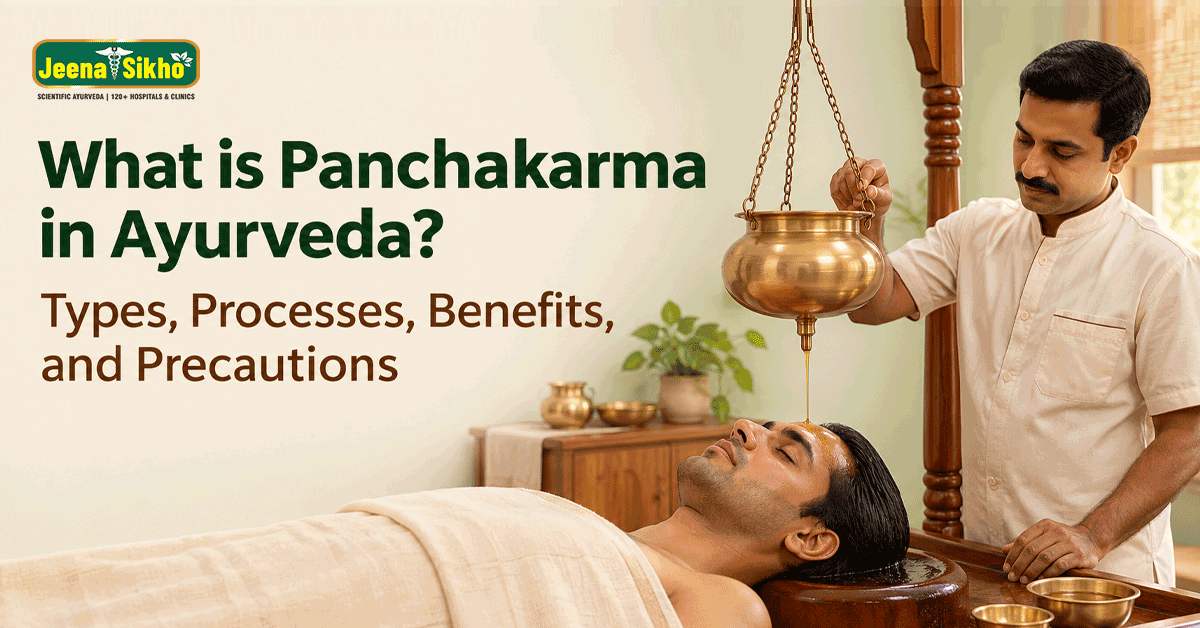

Ayurveda has been part of Indian healthcare for centuries, and Panchakarma is one of its best-known practices. The Panchakarma in Ayurveda is a five-procedure routine meant to cleanse the body and settle dosha imbalances. Which of them you get, if any, depends on your health, your constitution, and how strong you are, so a physician has to assess you first.
But what is Panchakarma in Ayurveda, and why is it considered an important traditional practice? Learning about its types, process, possible benefits, and precautions can help you to decide well about Ayurvedic wellness.
What Is Panchakarma Therapy?
The word comes from the Sanskrit pancha (five) and karma (action). These five actions belong to Shodhana Chikitsa, the purification side of Ayurveda.
Ayurveda holds that Ama, the undigested waste left behind by weak digestion, upsets the body’s balance. Panchakarma Therapy tries to deal with this through procedures, food changes and daily habits. It is more than a massage or a herbal steam bath. A full programme has three stages: preparation, the main procedures and aftercare.
Why Modern Life Makes Panchakarma Relevant
Many of us eat at odd hours, sit for long stretches, move too little and sleep badly. Over time that can show up as poor digestion, low energy and a general run-down feeling.
Ayurveda answers this with regular meals, enough rest and routines that follow the seasons. Panchakarma can be one part of such a plan, but only after an assessment. Good food, exercise, sleep and proper medical care still matter more than any single therapy.
Want to learn whether Panchakarma is suitable for your health needs? Reach out to us at Jeena Sikho HiiMS for personalised Ayurvedic guidance and consultation with our healthcare experts.
Book your consultation today
Ayurvedic Tridosha: Understanding Your Unique Constitution
Tridosha is a core idea in Ayurveda. It names three forces that are thought to run different functions in the body.
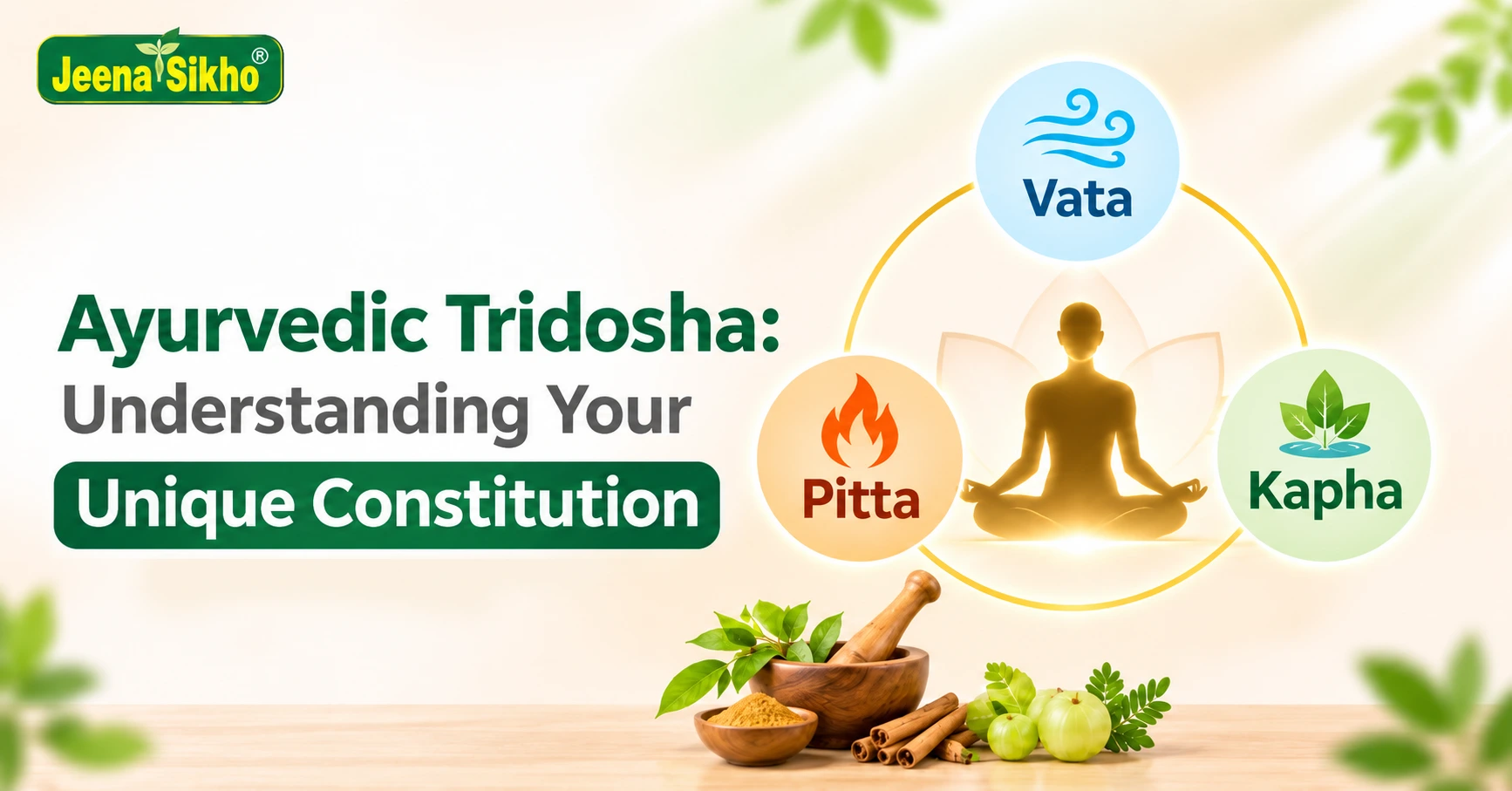
- Vata (air and space): movement, circulation, breathing and the nervous system.
- Pitta (fire and water): digestion, metabolism and body temperature.
- Kapha (earth and water): stability, strength, lubrication and structure.
Each person has their own mix, called Prakriti. Practitioners also check your present state, called Vikriti, before they suggest any procedure.
The Three Stages of Panchakarma
Every programme moves through three stages, adjusted to the person.
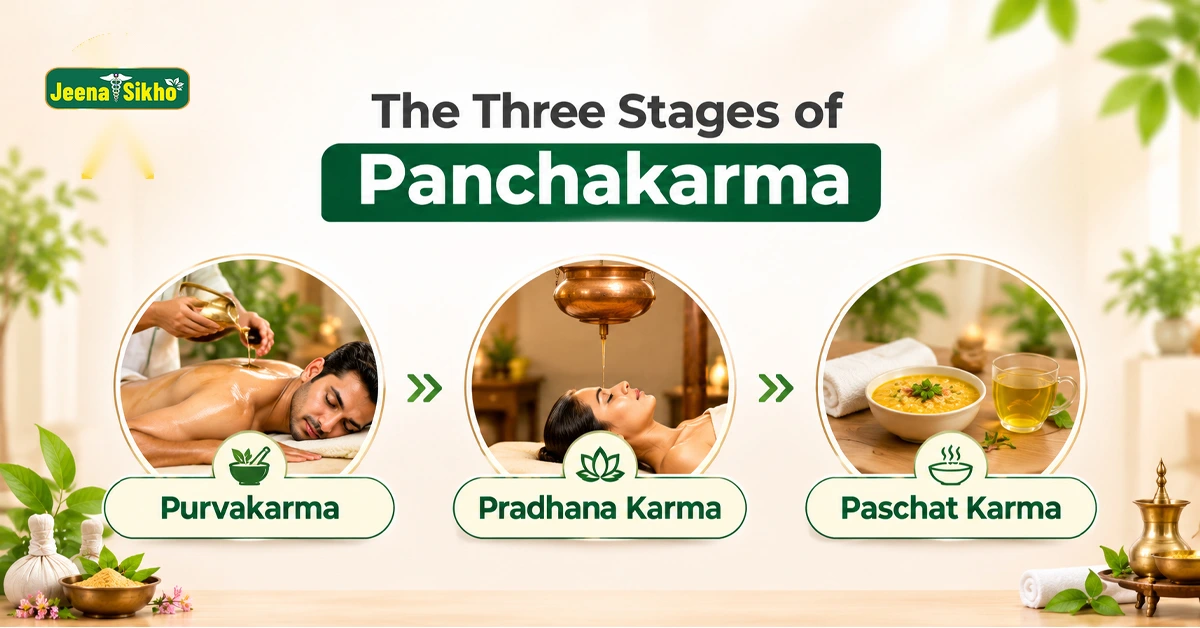
Purvakarma (preparation). The body is readied with two practices. Snehana is oleation: medicated oil or ghee, either applied on the skin (often as Abhyanga, an oil massage) or taken by mouth as prescribed. Swedana is controlled sweating, usually with herbal steam.
Pradhana Karma (main procedures). The chosen cleansing therapies are carried out here. The five are Vamana, Virechana, Basti, Nasya and Raktamokshana.
Paschat Karma (aftercare). This stage is about recovery and a slow return to normal food and routine. After some procedures, a graded diet called Samsarjana Krama may be advised to ease the digestive system back to normal.
The Five Basic Shodhanas of Panchakarma
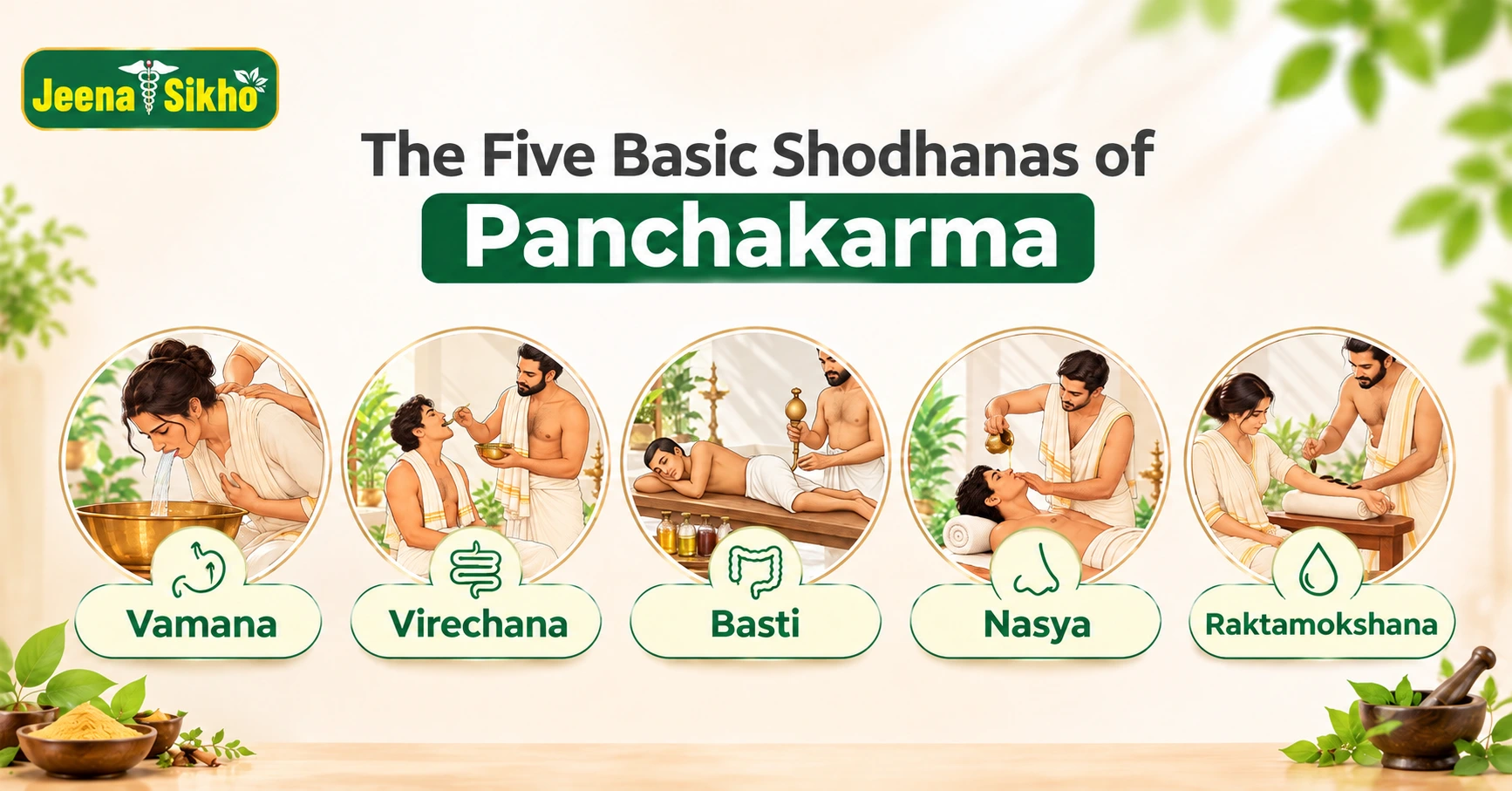
The five principal procedures of Panchakarma in Ayurveda are traditionally used for different purposes. Each has a specific method and requires professional supervision.
-
- Vamana (emesis): is a supervised vomiting procedure that I have seen used for centuries to treat excess Kapha. Vamana preparation is strict. Vamana monitoring is careful.
- Virechana (purgation) is a controlled bowel cleansing using herbal preparations that is linked with Pitta. Virechana requires timing and dosage.
- Basti (medicated enema): involves giving medicated oils or herbal decoctions through the rectum. Ayurveda sees Basti as a therapy for Vata imbalance.
- Nasya (nasal administration): herbal oils or other preparations put through the nostrils, used for the head and neck region.
- Raktamokshana (bloodletting): removal of a small amount of blood in selected cases, sometimes with leeches. It needs trained hands and strict hygiene.
Know More About Panchakarma therapy
Health Benefits of Panchakarma Therapy
The benefits of Panchakarma therapy are usually described in terms of dosha balance, digestion and general wellness, and they differ from person to person. Commonly mentioned ones:
- Digestion: the diet and procedures focus on Agni, the digestive fire.
- Dosha balance: different therapies target Vata, Pitta or Kapha.
- Relaxation: Abhyanga and Swedana may leave you calmer and more comfortable.
- Better habits: regular meals, rest and routine become part of daily life.
- Awareness of recovery: guidance before and after therapy makes you notice how you live.
Who Should Consider a Panchakarma Cleanse?
Panchakarma suits people who want supervised Ayurvedic care, or who were advised specific procedures after an assessment. Some people should avoid or delay it: pregnant women, anyone with an infection or fever, people who are very weak or dehydrated, and those with serious heart, kidney or other systemic illness.
Before you start:
- See a qualified Ayurvedic physician.
- Share your medical history and current medicines.
- Follow the diet and lifestyle advice you’re given.
- Pick a facility with good hygiene and safety practices.
- Ask about the risks and the recovery period.
How Long Does Panchakarma Take?
There is no fixed length. It depends on your condition, the procedures chosen, how much preparation you need and how you recover. Some programmes run a few days, others several weeks. The time splits into preparation (assessment, diet planning, Snehana and Swedana), the main procedures, and recovery. Don’t pick a centre because its package is shorter or longer. Ask whether the plan is safe and fits you.
Lifestyle and Diet During Panchakarma Therapy
Food and routine count for a lot. In general:
- Eat fresh, easily digestible meals at regular times, as your physician advises.
- Drink enough water unless you’ve been told to limit fluids.
- Cut down on fried food, packaged snacks and heavy meals.
- Sleep well and avoid hard physical effort.
- Follow the schedule for medicines, therapies and rest.
Samsarjana Krama brings regular meals back step by step, based on your digestion and how intense the procedure was. No single diet chart works for everyone.
Integration: Life After Panchakarma Therapy
Aftercare, called Panchakarma, is part of the treatment and not an add-on. You may be asked to return to your usual diet slowly, keep fixed sleep and wake times, add suitable exercise, avoid overexertion, continue prescribed medicines and come back for follow-ups. One course won’t keep you well for life. The habits you carry forward do that.
Can You Do Panchakarma at Home?
A gentle oil massage at home is fine. The full Therapy is not. Vamana, Virechana, Basti, Nasya and Raktamokshana need assessment, prescribed preparations and monitoring by trained professionals. Done wrongly, they can cause dehydration, electrolyte imbalance, infection and other complications. If you’re curious, talk to a qualified Ayurvedic physician first.
How Does Jeena Sikho HiiMS Support Ayurvedic Wellness?
Jeena Sikho HiiMS Hospital combines traditional Ayurvedic principles with individual assessment, diet guidance and lifestyle changes. Depending on the physician’s assessment, patients may get advice on suitable therapies, Panchakarma procedures and personalised diet plans. The network has 125+ hospitals, clinics and day care centres and 540+ doctors and healthcare experts and has supported over 1 million patients. You can speak to the team about available procedures, eligibility and precautions.
Conclusion
Panchakarma in Ayurveda pairs five procedures with preparation, diet guidance and aftercare, and each one has to be matched to the person. Knowing the process, the possible benefits and the precautions helps you decide sensibly. Check with a qualified Ayurvedic physician before you consider any of it.
Want personalised Ayurvedic guidance? Reach out to Jeena Sikho HiiMS through Virtual OPD (VOPD) to understand suitable wellness options based on your health requirements.

FAQs
1. What is Panchakarma in Ayurveda?
I find that Panchakarma is a method that involves the five different purification Therapy. The main goal of Panchakarma is to balance the doshas by using Therapy and lifestyle advice.
2. What are the 5 types?
The 5 types are Vamana (emesis), Virechana (purgation), Basti (medicated enema), Nasya (nasal) and Raktamokshana (bloodletting).
3. How long does Panchakarma Therapy take?
It varies with your health, the procedures and your recovery. A programme can last several days or a few weeks.
4. Can I perform Panchakarma at home?
A professional assessment is required along with the skilled practitioners and clinical oversight.
5. What precautions should I take before Panchakarma?
An experienced Ayurvedic doctor should be consulted. Your medical history and current medications should be discussed. Any risk factors can then be discussed. Certain treatments may need to be avoided or delayed if you are pregnant, have an acute infection, are very weak or have a serious condition.
Disclaimer: The information provided on this blog is for general educational and informational purposes only. It is not intended to replace professional medical advice, diagnosis, or treatment. Always consult a qualified healthcare professional before making any changes to your diet, lifestyle, or treatment plan. Individual results may vary.