Author: healingwithacharya
August 08, 2026
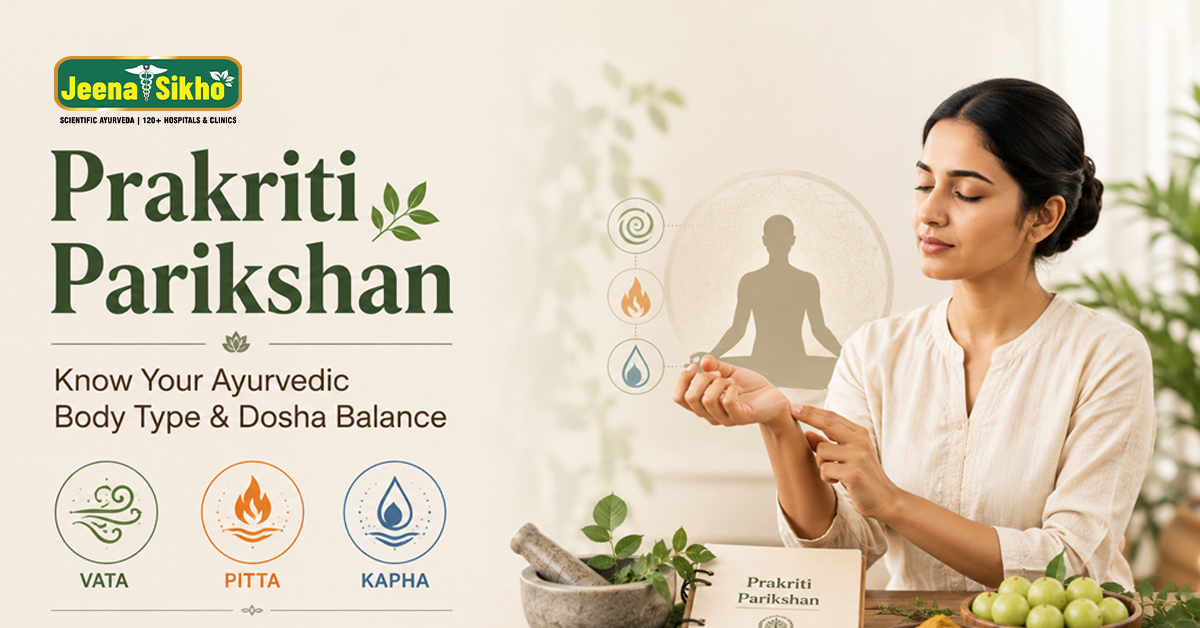
Ever wondered why your friend eats whatever she wants and never gains an ounce, while you look at a dessert menu and somehow put on weight? Or why some people are wide awake at 6 AM, and others don’t function until noon? Ayurveda has had an answer for this for centuries, something called Prakriti Parikshan.
Not a personality quiz, not a horoscope. A real framework for understanding how your specific body actually works. Here’s what it involves, how it gets assessed, and why it matters more than people give it credit for.
What is Prakriti Parikshan? Understanding the Basics
Prakriti, put simply, is the ratio of Vata, Pitta, and Kapha you were born with. Set at conception. Doesn’t change, not once, for your entire life. Parikshan just means examination.
Put the two together, and Prakriti Parikshan is the process of figuring out that exact ratio, so diet, treatment, daily routine, all of it gets built around your actual constitution instead of some generic advice meant for nobody in particular.
How is an Ayurvedic Body Type Test Actually Conducted?
A real Ayurvedic Body Type Test goes way beyond a five-minute online quiz. A trained practitioner checks the pulse (Nadi Pariksha) along with the tongue, skin, and physical build.
Then come the conversation, digestion, sleep, energy throughout the day, and even how you handle stress emotionally. Why all this? Because physical traits alone miss a lot. Some of the subtler signs only show up once someone’s actually reading your pulse or asking the right questions about your daily habits.
Prakriti Analysis: Physical Traits Across the Three Doshas
Most people start here, with physical traits, since they’re the easiest to spot. A basic Prakriti Analysis usually looks like this:
- Vata-dominant bodies, light-framed, dry skin, quick and sometimes restless movement
- Pitta-dominant bodies, medium build, warm skin, sharp and focused
- Kapha-dominant bodies, sturdier frame, smoother skin, calm and steady energy
Most people aren’t purely one type, though. Usually, a mix of two, with one dosha pulling ahead of the other.
Ayurveda Prakriti Assessment: Beyond Just Physical Traits
A proper Ayurveda Prakriti Assessment goes well past what you look like on the outside. Digestion tells a lot. Vata types have an appetite that swings around, Pitta types get sharp, strong hunger, and Kapha types run slow and steady.
Then there’s sleep, emotional patterns under pressure, and even how your body reacts when the weather shifts. All of it feeds into the full picture. A quick checklist just can’t capture that kind of depth.
Know Your Prakriti: Why Does It Actually Matter for Your Health?
Here’s where this stops being trivia and starts being genuinely useful. Once you know your Prakriti, generic advice no longer makes sense. A Pitta-dominant person dealing with acidity needs a completely different approach than a Kapha-dominant person with the same complaint.
Herbs, daily routine, even the best time of day to work out, all of it shifts based on your specific constitution. Everything else in personalised Ayurveda builds on this one foundation.
Can You Really Self-Assess Your Ayurvedic Constitution?
To an extent, sure, and it’s not a bad place to start. An Ayurvedic Constitution Test through self-observation gives you a rough read on your dominant tendencies. But there’s a catch.
People misjudge themselves more often than you’d think, especially when a current imbalance, Vikriti, masks what their actual birth constitution, Prakriti, really looks like. That’s exactly why a trained practitioner catches things that self-observation alone tends to miss.
How to Identify Your Ayurvedic Body Type at Home
Curious before booking an actual consultation? A few things to notice are a rough starting point for how to identify your Ayurvedic body type:
- Your natural build and how fast you gain or lose weight
- Your digestion: variable, sharp, or slow and steady
- How you handle stress, scattered and anxious, intense and irritable, or calm and quiet
Treat this as a starting point, though, not the final word.
Where Can You Get a Proper Prakriti Parikshan Done?
Acharya Manish Ji focuses on, going past surface-level checklists into a real, guided read of your prakriti and whatever imbalance you’re currently carrying.
No generic online quiz here. Just a proper reading, rooted in classical Ayurvedic methods, tailored to how you’re actually living and feeling right now.
Conclusion
Knowing your Prakriti Parikshan gives you something generic health advice simply can’t: a starting point built around your actual body, not some average pulled from thousands of strangers.
At Healing with Acharya Manish Ji, you can have this properly assessed and walk away with guidance tailored to your constitution. You can also book a VOPD consultation with Jeena Sikho HiiMS to talk through how this connects to anything specific you’re currently dealing with.

FAQs
Q1. Can my Prakriti change as I get older?
No. It’s fixed for life. What actually shifts is your Vikriti, the current imbalance.
Q2. Is an online quiz enough to know my Prakriti properly?
Not really. Decent starting point, sure, but pulse reading and an actual consultation pick up on things a quiz just can’t.
Q3. Do twins share the same Prakriti?
Not always. Even identical twins can end up with slightly different constitutions depending on individual developmental factors.
Q4. How long does an actual Prakriti Parikshan consultation take?
Depends, but a proper one usually runs longer than any quick checklist, often around 30 to 45 minutes.
Q5. Does this help with anything beyond just diet?
Yes. It shapes daily routine, when you should exercise, and even which season tends to throw you off balance the most.
Disclaimer: The information provided on this blog is for general educational and informational purposes only. It is not intended to replace professional medical advice, diagnosis, or treatment. Always consult a qualified healthcare professional before making any changes to your diet, lifestyle, or treatment plan. Individual results may vary.