Author: healingwithacharya
September 16, 2026
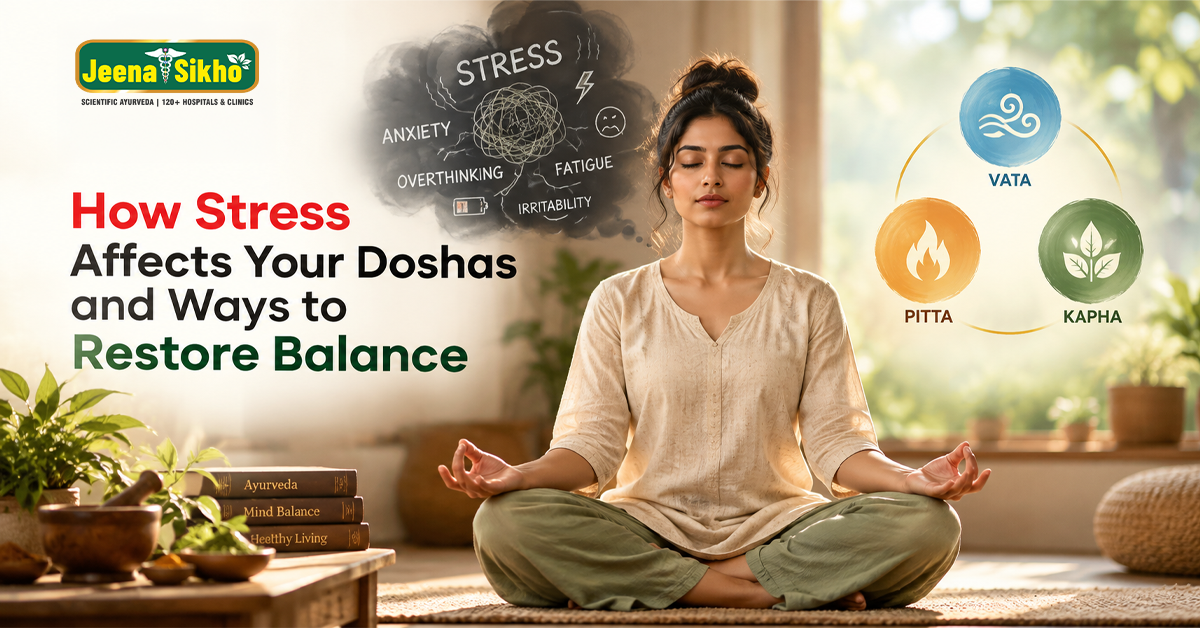
Stress is often viewed as a purely mental challenge, but its effect reaches far deeper into your physical health. In traditional wellness systems health is maintained when your mind and body stay in complete harmony. Ancient wisdom explains that your health is governed by three primary body energies, known as Ayurveda doshas: Vata, Pitta and Kapha.
When you experience mental overload, stress acts like an internal toxin that disrupt these three energies. Because everyone handles pressure differently, effective stress management requires understanding your dosha. Understanding how to restore your natural dosha balance allows you to calm your mind, protect your digestion and maintain steady energy throughout the day.
How Stress Impacts Each Individual Dosha
Everyone responds to pressure differently. Some people feel anxious and restless, others get frustrated and irritated while some feel numb and sluggish. This happens because stress triggers your dominant internal energy in a specific way.
Vata and Stress: Anxiety, Restlessness, and Insomnia
Vata represents the elements of air and ether. It governs movement, circulation and nervous system signals. Because Vata moves quickly, sudden pressure or chaotic environment can easily disrupt it. A severe Vata imbalance caused by stress often shows up as
- Racing, uncontrollable thoughts and persistent worry.
- Cold hands, dry skin, and muscle tension.
- Irregular digestion, bloating and gas.
- Difficulty falling asleep or waking up frequently during night.
Pitta and Stress: Anger, Acidity and Burnout
Pitta represents fire and water, controlling body temperature, metabolism, and digestion. When Pitta types face high expectations, tight deadlines or frustration their internal fire burns too hot. A noticeable Pitta imbalance typically presents as
- Irritability, impatience, and sudden outbursts of anger.
- Acid reflux, heartburn or loose stomach movements.
- Inflammatory skin breakouts, redness or rashes.
- Physical exhaustion combined with an intense, restless drive to keep working.
Kapha and Stress: Lethargy, Withdrawal, and Heaviness
Kapha combines the elements of earth and water providing structure, stability, and lubrication to tissues. While Kapha is naturally grounded, long-term unmanaged stress causes this energy to stagnate. A severe Kapha imbalance caused by stress often shows up as
- Deep fatigue, lack of motivation, and mental fog.
- Emotional eating and intense cravings for sweet or salty foods.
- Fluid retention, heaviness in the chest and stubborn weight gain.
- A desire to isolate yourself and sleep for unusually long hours.
Recognising these unique reactions helps you protect your internal dosha balance before temporary pressure leads to long-term exhaustion.
Once you identify how your unique constitution reacts under pressure, you can use targeted daily habits to bring your system back into harmony.
Natural Ways to Restore Balance & Reduce Stress
Restoring harmony does not require complicated routine. Simple, consistent daily habits tailored to your dominant energy bring rapid relief to your body and mind.
For Vata Stress: Grounding and Warmth
When Vata is elevated your body needs stability, warmth and a consistent routine to feel safe again.
- Eat Warm, Cooked Foods – Focus on freshly prepared meals like vegetable soups, porridge, and khichdi with healthy fats like ghee. Avoid raw, dry or cold foods that increase internal air.
- Warm Oil Massage (Abhyanga) – Massaging your body with warm sesame oil before a bath grounds nervous energy, soothes the skin, and strongly promotes long-term mental wellness.
- Fixed Routines – Going to bed and eating meals at the same time every day stabilises an overactive nervous system.
For Pitta Stress: Cooling and Calming
When Pitta is elevated your body needs cooling habits and mental space to release accumulated heat.
- Eat Cooling Foods – Incorporate sweet fruits, cucumbers, coconut water, coriander tea, and fresh mint into your diet. Avoid hot spices, fried foods, and extra caffeinated drinks
- Spend Time in Nature – Taking a gentle evening walk under moonlight or spending time near water bodies helps restore your emotional balance
- Practice Pranayama – Spend 5 minutes everyday practicing Sheetali Pranayama (cooling breath) to instantly calm anger and lower internal heat
For Kapha Stress: Stimulating and Lightening
When Kapha is elevated, your body needs movement, warmth and circulation to break through inactivity
- Eat Light and Spiced Meals – Choose light, warm, and freshly spiced foods containing ginger, black pepper, and turmeric to stimulate slow digestion
- Engage in Daily Exercise – Aim for 30 minutes of energetic daily movement such as brisk walking, jogging or active yoga to clear sluggish physical energy
- Try Dry Skin Brushing – Brushing your skin with a natural bristle brush before showering stimulates lymphatic drainage and reduces feelings of physical heaviness
Herbal Support for All Doshas
Incorporating natural Ayurvedic remedies offer gentle, natural support for your nervous system regardless of your primary stress response. Adaptogenic herbs such as Ashwagandha help to reduce cortisol levels and alleviate physical tension & Brahmi helps to relax an overactive brain and improve clarity. Practicing these habits regularly help rebuild your overall dosha balance.
Reclaiming Your Inner Harmony
Stress is an inevitable part of modern life but it does not have to compromise your physical health. Because your body’s stress response depends on which energy is most active, generic solutions rarely provide lasting results. Identifying the early warning signs enables you to make lifestyle adjustments before minor pressure creates lasting effects. Taking small, conscious steps every day nurtures your natural dosha balance and protects your vitality for years to come.
To begin your journey toward lasting wellness discover your unique body constitution by taking a Prakriti Parikshan on healing with Acharya Manish. Understanding your primary dosha empowers you to take early steps to keep your mind calm and your body strong.
Book Your Prakriti Consultation
FAQs
Q1. How do I know which dosha is imbalanced due to stress?
Pay attention to your primary symptoms. If stress triggers anxiety, racing thoughts and sleep issues, Vata is high. If it causes anger, acidity, and skin breakouts, Pitta is high. If it leads to fatigue, sadness and overeating, Kapha is high.
Q2. Can stress cause more than one dosha to become imbalanced at the same time?
Yes. Prolonged stress typically begins by disturbing Vata due to nervous strain. Over time an unmanaged Vata disruption can upset Pitta and Kapha as your body’s overall energy reserves weaken.
Q3. How quickly can Ayurvedic remedies help restore my dosha balance?
You can feel initial mental calmness within a few days of practicing grounding routines. However, achieving deeper tissue balance usually takes 2 to 4 weeks of consistent dietary and lifestyle habits.
Q4. What is the single best daily habit to calm a Vata stress response?
A daily Abhyanga using sesame oil followed by a warm bath is one of the most effective ways to soothe an overstimulated Vata nervous system.
Q5. Can changing my diet really improve my emotional balance during stressful times?
Yes. Eating fresh, warm, easily digestible foods reduces strain on your digestive system. A calm stomach directly supports neurotransmitter balance, which lowers anxiety and stabilises your mood.
Disclaimer: The information provided on this blog is for general educational and informational purposes only. It is not intended to replace professional medical advice, diagnosis, or treatment. Always consult a qualified healthcare professional before making any changes to your diet, lifestyle, or treatment plan. Individual results may vary.