
Vata is one of the three doshas described in Ayurveda. The other two are Pitta and Kapha. Vata governs movement, breathing, and the flow of nerve signals. It also supports the mind and the senses. When Vata is balanced, the body feels light, and the mind stays clear. When it rises, people may feel restless, dry, or tired.
For this reason, many readers search for how to remove excess Vata from body. A 2022 study in the Journal of Ayurveda and Integrative Medicine surveyed 150 healthy young adults in Karnataka. It found that 16% reported regular constipation, 12.7% reported sleep disturbances, and 9% reported stress. These daily concerns, in fact, often overlap with the signs linked to Vata. This blog explains those signs, the common causes, and daily steps to restore balance.
What Is Vata Dosha?
Vata relates to the air and space elements. Its main qualities are light, dry, mobile, and cool. These qualities explain its role in the body. Muscle movement, the flow of breath, and the activity of the nervous system all relate to Vata.
Moreover, everyone has Vata. Your body type, known as prakriti, shows which doshas are strongest in you. A person with a naturally strong Vata may be slim, quick and energetic. Such a person may also feel cold easily and sleep lightly. However, balance matters more than type alone. When Vata stays steady, daily life feels smooth. When it rises beyond its normal range, the signs begin to appear.
Not sure whether your Vata is balanced?
Vata Dosha Symptoms: Signs of Excess Vata
When Vata rises, the signs often appear in both body and mind. Physical signs can include:
- Dry skin and rough nails
- Cracking or stiff joints
- Constipation or hard stools
- Poor sleep and light, broken rest
- Cold hands and feet
- Twitching in the muscles
Similarly, mental signs can include restlessness, anxiety, overthinking, fear, and difficulty making decisions. Many people also feel tired after a busy day, even after rest.
Each sign can have many causes. A single sign does not confirm excess Vata. Persistent symptoms need a doctor’s check. Some signs need prompt medical care. These include sudden weakness or numbness, trouble speaking, fainting, persistent trembling, chest pain, and severe pain with constipation.
Increased Vata in Body: Causes and Aggravation
Several daily habits can increase Vata over time. Irregular meals are one common cause. Skipping food or eating at uneven times can unsettle digestion. Cold, dry and packaged foods also add to the Vata imbalance causes. Likewise, too many raw salads and dry snacks may increase dryness.
In addition, late nights and poor sleep are another factor. The body misses its natural rest, and the mind stays active. Overwork, constant screen use and high stress add to this load. Frequent travel and sudden changes in routine can also unsettle Vata.
Likewise, seasons play a role. Ayurveda links Vata with colder and drier periods of the year. Routines therefore need to change with the weather. Staying warm and keeping a steady routine helps during these months. The good news is that daily habits can be adjusted step by step.
How to Remove Excess Vata From Body
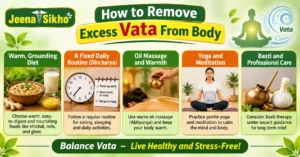
Ayurveda guides people on how to remove excess Vata from body through steady daily care. Each step works best when repeated every day.
Warm, Grounding Diet
Vata responds well to warm, moist, and cooked food. Soups, dals, cooked grains and seasonal vegetables are good choices. A small amount of ghee or oil can nourish the tissues and support smooth digestion. Cooks traditionally use spices such as cinnamon, cloves, and black pepper to warm digestion. Cold drinks, raw salads, and dry snacks, on the other hand, may increase dryness. Eat at regular times, and keep dinner early and light.
A Fixed Daily Routine (Dincharya)
Ayurveda places great value on a steady routine. Wake up and sleep at the same times each day. Eat meals at fixed hours. Keep work and rest in a clear rhythm. This regularity calms Vata, because Vata responds well to predictability. Even a small routine such as a short walk after dinner can help.
Oil Massage and Warmth
Abhyanga, a warm oil massage is a classic practice for calming Vata. Gentle strokes on the body can ease dryness and tension. Still, keep the body warm, especially in cold weather. Wear warm clothing, avoid long exposure to cold winds, and take a warm bath when you can.
Yoga and Meditation
Gentle yoga helps ground the body. Many teachers suggest poses such as Vrikshasana (tree pose), Balasana (child’s pose), and Shavasana (corpse pose) for Vata. Meanwhile, meditation and slow breathing calm the mind. Practise for 10 to 15 minutes each day, and stop any pose that causes pain.
Basti and Professional Care
Ayurveda considers Basti, a medicated enema, among the main therapies for Vata. Your doctor plans it only after a proper assessment. A qualified practitioner decides whether Basti suits you and when. Never start any therapy on your own.
Want an Ayurvedic care routine?
Why Choose Ayurveda?
The approach starts with understanding the person. Doctors review your reports, check your pulse, tongue, and digestion, and ask about sleep and daily routine. This matters for Vata concerns, because two people with similar signs can have very different causes. The team then plans care around the cause, not only the symptom. Each plan is personal. Diet, daily routine, yoga, herbal support and therapies are chosen after an assessment. Doctors offer Panchakarma only after a check.
Acharya Manish Ji guides the Ayurvedic philosophy behind this care. His focus on daily routine, diet, and balance shapes every plan.
Conclusion
Vata is part of how the body moves, breathes, and thinks. The real goal is to keep it steady. Many people notice the change first in sleep, digestion, or a restless mind. Small daily choices can bring that steadiness back. Warm meals at set times, a slow evening walk, and a few quiet minutes before bed all count. So learning how to remove excess Vata from body is less about one big step and more about many small ones. If the signs continue, a doctor’s check gives you the clearest next step.
Balanced daily habits can support your Vata over time. Talk to the Ayurvedic expert practitioners team and get a routine that suits you.

FAQs
Q1. Can Vata be removed completely from the body?
Vata is needed for healthy movement, breath, and nerve function. The goal is balance, not removal.
Q2. What are the main Vata dosha symptoms?
Dryness, cracking joints, constipation, poor sleep, cold hands and feet, restlessness and anxiety are the most common signs.
Q3. Which foods help balance Vata?
Warm, moist, cooked foods such as soups, dals, cooked grains and a little ghee, eaten at regular times are commonly suggested.
Q4. Does yoga help with increased Vata in the body?
Gentle yoga and slow breathing help many people feel grounded. Start slowly, and follow a qualified teacher’s guidance.
Q5. When should I see a doctor about Vata-related symptoms?
See a doctor if symptoms persist. Seek prompt care for sudden weakness, numbness, trouble speaking, fainting, or chest pain.
References:
https://pmc.ncbi.nlm.nih.gov/articles/PMC9034458
Disclaimer: The information provided on this blog is for general educational and informational purposes only. It is not intended to replace professional medical advice, diagnosis, or treatment. Always consult a qualified healthcare professional before making any changes to your diet, lifestyle, or treatment plan. Individual results may vary.