Author: healingwithacharya
July 31, 2026
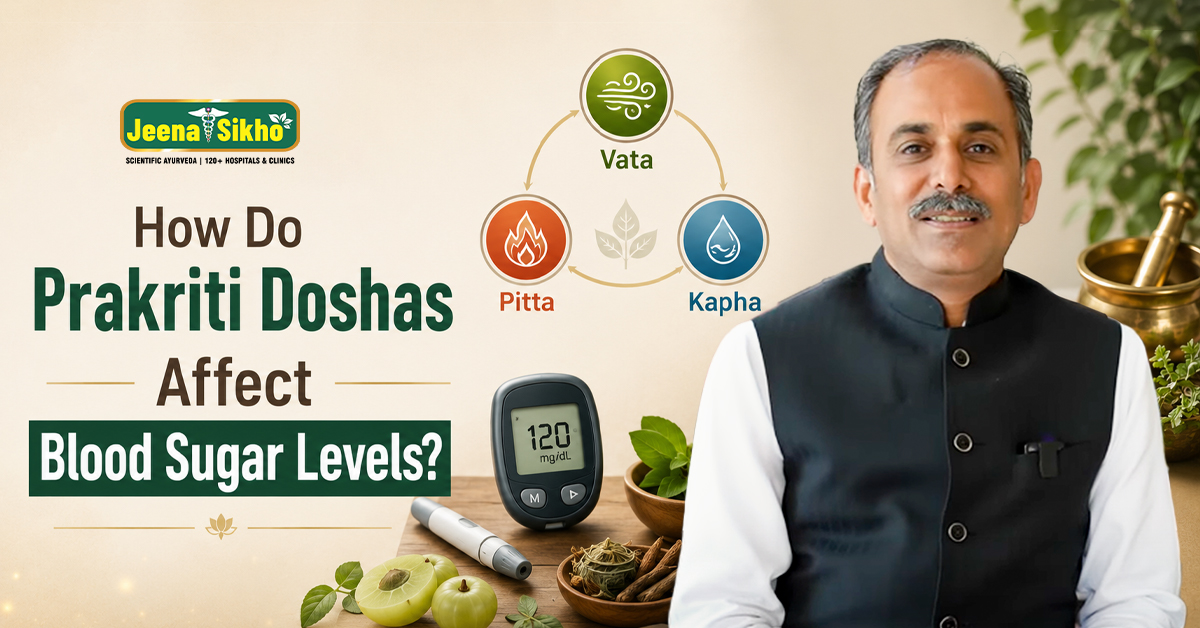
Two people eat the exact same sweet, same portion, same time of day. One’s blood sugar levels barely move. The other spikes and crashes an hour later. Ayurveda explains that your Prakriti (Vata, Pitta and Kapha) influences digestion, metabolism and the way your body processes sugar. This is why two people can have different blood sugar responses after eating the same food.
Understanding this connection isn’t just interesting trivia. It genuinely changes how diabetes, or Prameha as Ayurveda calls it, gets approached for each individual person.
What is Prameha, and How Does It Connect to Prakriti Doshas?
Before understanding how Prakriti affects blood sugar, it is helpful to know that Ayurveda describes diabetes under the broader concept of Prameha.
In Ayurveda, diabetes is considered part of a broader group of disorders called Prameha. Classical Ayurvedic texts describe 20 types of Prameha, including 10 linked to Kapha, 6 to Pitta, and 4 to Vata.
Ten, the largest group by far, come from Kapha. None of this is random. Each Prakriti doshas combination responds differently when digestion goes off track, which is exactly why Ayurveda never treats diabetes as one single condition with one single fix.
Kapha Dosha and Blood Sugar: The Most Common Link
This is where most diabetes cases actually start, according to Ayurveda. Kapha Dosha governs stability and structure in the body, but when it builds up excessively, it clogs the channels responsible for insulin function and fat metabolism. Sweet, oily, heavy food. A sedentary routine.
Daytime sleeping. All of these feed excess Kapha, and this pattern is closely tied to what we’d now call Type 2 diabetes, generally considered the most manageable form through diet and lifestyle correction.
Vata Dosha and Blood Sugar: When Digestion Runs Erratic
Vata Dosha tells a different story entirely. Instead of heaviness and stagnation, Vata imbalance shows up as erratic digestion, an inconsistent Agni that struggles to process and utilise sugar properly.
This form, called Madhumeha in classical texts, is actually considered harder to manage than Kapha-driven diabetes, since Vata’s unpredictable nature makes blood sugar swing rather than sit consistently high.
Pitta Dosha and Blood Sugar: The Metabolic Fire
Then there’s Pitta Dosha, tied to the body’s transformative fire. When Pitta builds up and disturbs the small intestine before reaching the liver, it may affect the pancreas directly, disturbing insulin production at its source.
This pattern often overlaps with metabolic derangements related to inflammation, and strangely, some Ayurvedic texts even link autoimmune-driven Type 1 diabetes with a combined Vata-Pitta imbalance from birth called Sahaja Prameha.
Prakriti and Diabetes: Does Your Birth Constitution Actually Matter?
Fair question, and the honest answer is yes, but not in a way that guarantees anything. Prakriti and diabetes are connected in the sense that your natural constitution shapes which imbalance you’re more prone to developing, not whether you’ll develop it at all.
A Kapha-dominant person carries a natural tendency toward sluggish metabolism, but lifestyle still plays the deciding role. Someone Vata- or Pitta-dominant isn’t immune either; they just tend toward different patterns when things go wrong.
What Actually Triggers Diabetes in Ayurveda?
A handful of causes come up again and again across Ayurvedic texts:
- A sedentary lifestyle with little physical movement
- Excessive sweet, oily, or heavy food
- Daytime sleeping and irregular routines
- Chronic stress, along with emotions like fear and anxiety
- Repeated heavy meals without proper digestion in between
Regardless of which dosha predominates in a person’s Prameha, the same lifestyle triggers consistently emerge as the root cause.
How Ayurveda Approaches Managing Blood Sugar Naturally
Ayurveda is not just about chasing a number down, but about rekindling Agni, the digestive fire, and clearing Ama, the toxic buildup that blocks proper metabolism. Bitter and astringent foods such as bitter gourd, fenugreek, barley and mung beans are generally recommended as well as herbs such as turmeric and cinnamon which are known to improve insulin sensitivity.
Panchakarma therapies, particularly Vamana for Kapha-dominant cases, are sometimes used to clear accumulated toxins. None of this replaces prescribed diabetes medication or insulin therapy; it’s meant to work alongside conventional treatment, supporting the body’s own metabolic balance over time.
Conclusion
Understanding how your Prakriti doshas affect blood sugar levels can help you make more informed choices about diet, lifestyle and overall health. While Prakriti alone does not determine whether you will develop diabetes, knowing your natural constitution may help you adopt habits that better support balanced metabolism.
At Healing with Acharya Manish Ji, you can go a step further and understand your own body constitution properly, with personalised guidance built around your specific dosha pattern rather than generic advice. You can book an appointment for Prakriti Parikshan through the official website and get a clearer picture of what your body actually needs.

FAQs
1. Does knowing my dosha type help to prevent diabetes?
It can help you understand your natural tendencies and adapt diet and lifestyle accordingly but it’s not a guarantee that you will develop diabetes.
2. Is kapha diabetes easier to manage than vata diabetes?
Yes generally Kapha dominant diabetes responds well to diet and lifestyle changes while Vata driven cases can be more unpredictable.
3. Can Ayurveda replace insulin therapy in Type 1 diabetes?
No, Ayurveda does not replace insulin therapy for Type 1 diabetes, but can complement it. The focus is on supporting the overall metabolic balance, not replacing prescribed treatment.
4. What foods does Ayurveda recommend for balancing blood sugar?
They often suggest bitter gourd, fenugreek, barley, mung beans and spices such as turmeric and cinnamon.
5. How do I find out what my dominant Prakriti dosha is?
Self observation alone does not give the best assessment. Proper Prakriti Parikshan consultation with a trained practitioner is needed.
Disclaimer: The information provided on this blog is for general educational and informational purposes only. It is not intended to replace professional medical advice, diagnosis, or treatment. Always consult a qualified healthcare professional before making any changes to your diet, lifestyle, or treatment plan. Individual results may vary.