Author: Niteshwari
August 07, 2026
According to Ayurveda, maintaining good health requires balancing the three doshas—Vata, Pitta, and Kapha. The doshas are natural energy forms that assist in controlling bodily functions. From the doshas, Vata is referred to as the energy form that controls movement.
Vata enables the processes such as respiration, blood flow, metabolism, and nervous system signals, as well as thought and emotional processes.
Balancing Vata will mean the body experiences vigour and vitality. However, imbalances of Vata could occur due to unhealthy food consumption, erratic daily living patterns, stress, insomnia, and over-travelling.
Several physical and psychological changes will start showing up from these imbalances. Identifying the Vata Dosha symptoms will enable one to understand the communication from his/her body.
Through this blog, some of the symptoms and causes of Vata Dosha as well as ways of leading an Ayurvedic life will be discussed.
What Is Vata Dosha?
In Ayurveda, Vata is made up of the elements of air and space. It is responsible for every type of movement inside the body, from breathing and blinking to muscle movement and communication between the brain and nerves.
People with a Vata body type are usually energetic, creative, and quick learners. They often have a light body frame, dry skin, and fast speech. Moreover, they can become easily fatigued and are prone to imbalance if they do not have a regular schedule in life.
Balance in the Vata is necessary since it impacts the working of the other two doshas too.
What Causes Vata Dosha Imbalance?
There are various practices in our lives that can cause disturbance in Vata dosha balance and create an imbalance in it. These reasons include:
- Missing meals
- Fasting excessively
- Consuming dry or cold food
- Unusual meal times
- Sleeplessness
- Mental stress
- Traveling too much
- Working for long periods of time without sufficient rest
- Exercise in excess
- Cold weather and wind
In due course, this may result in a Vata dosha imbalance.
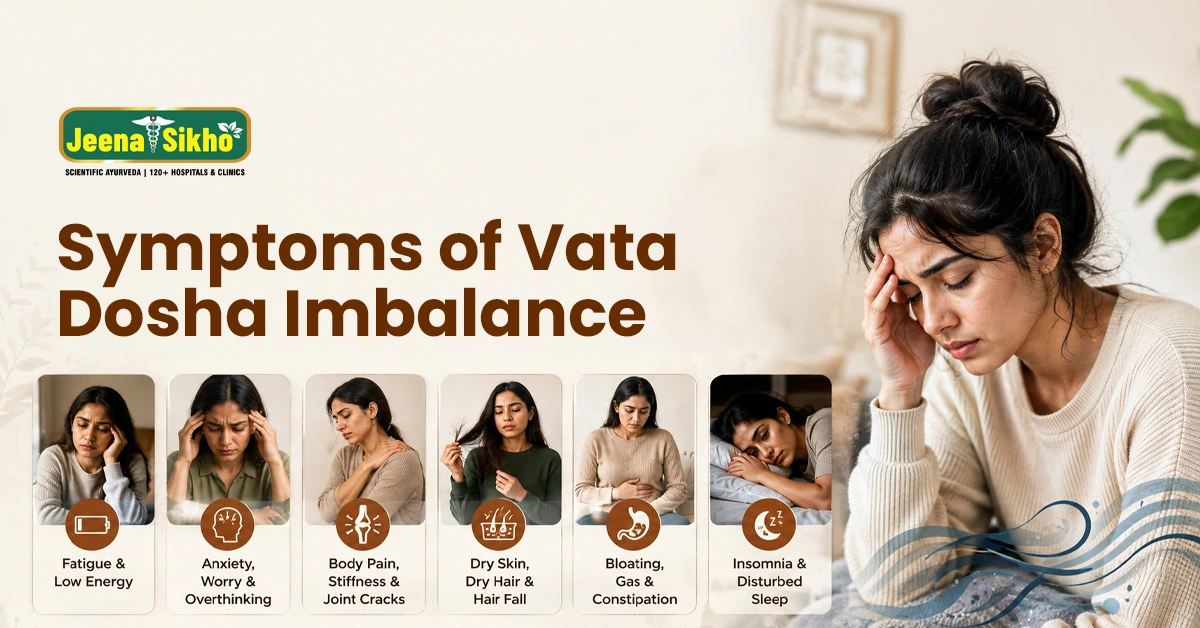
What Are the Symptoms of Vata Dosha Imbalance?
The Vata Dosha symptoms might differ from one person to another based on their body type and way of life.
Dry Skin and Dry Hair
Dryness is one of the most common Vata dosha imbalance symptoms that manifests itself in rough and dull skin and dry hair.
Constipation and Gas
The function of Vata dosha in our body is responsible for movement. Therefore, its imbalance may lead to indigestion that appears in the form of constipation, bloating, and gas.
Joint Pain and Clicking Sound
People who have increased Vata may suffer from joint stiffness or even joint pain accompanied by a cracking sound, especially when cold weather comes.
Cold Hands and Feet
Because of poor blood circulation caused by Vata Dosha imbalance, hands and feet may turn cold despite favourable surrounding temperature.
Difficulty Sleeping
Trouble falling asleep, light sleep, or waking up frequently during the night are common symptoms of Vata dosha imbalance.
Anxiety and Restlessness
Because Vata is so closely associated with the nervous system, an imbalance could lead to anxiety, nervousness, fear, or restlessness.
Difficulty with Concentration
A person will find it difficult to concentrate or complete tasks since their brain will always be preoccupied.
Irregular Hunger
In one instance, there is intense hunger, and on another instance, there is absolutely no hunger at all.
Fatigue
Even after adequate rest, some individuals may feel low on energy because the body’s natural balance has been disturbed.
Weight Loss
Unexpected weight loss or difficulty maintaining body weight can also be one of the Vata imbalance signs, especially in individuals who naturally have a Vata-dominant body type.
How Does Vata Imbalance Affect Daily Life?
If Vata remains disturbed for a prolonged period, it can lead to problems with normal functioning. An individual may suffer from fatigue, lack of concentration, or inability to keep a consistent schedule. Inability to eat due to digestive problems or mood swings due to inadequate sleep can be caused by Vata imbalance.
It does not mean that it leads to any disease; however, it is necessary to return to proper health balance through nutrition and proper lifestyle.
Foods That May Help Balance Vata
Ayurveda recommends warm, freshly prepared meals for people experiencing increased Vata. Foods that are nourishing and easy to digest are generally preferred.
Some foods that may be beneficial are:
- Warm soups of vegetables
- Khichdi
- Moong Dal
- Rice
- Ghee in small quantities
- Seasonal cooked vegetables
- Soaked almonds
- Sesame seeds
- Warm milk, if required
- Fresh seasonal fruits
It may be beneficial to avoid certain foods which may aggravate Vata such as:
- Cold beverages
- Dry snacks
- High quantity of salads
- Packaged foods
- Very spicy and very cold foods
A healthy diet in combination with proper eating habits may be beneficial in Ayurveda.
Lifestyle Tips to Balance Vata Naturally
Healthy daily habits are considered just as important as food in Ayurveda. Some simple practices include:
- Eat meals at the same time every day.
- Sleep early and wake up at fixed timings.
- Drink warm water all day long.
- Do gentle yoga on a regular basis.
- Go for mediation and breathing practices in order to avoid stress.
- Never skip any meals.
- Keep your body warm in the winter season.
- Massage your body daily using good-quality oils.
- It is believed that following the above daily routine creates a state of
- stability that proves good for Vata.

When Should You Seek Professional Advice?
Digestive disturbances and insomnia are common and can be caused by various factors. But, if these ailments persist for a long period of time, are intense, or start to interfere with your regular activities, then it becomes important for you to seek advice from a trained and experienced health professional.
A trained practitioner of Ayurveda will be able to analyse your body type, lifestyle and present state of health before offering suitable advice regarding your diet and lifestyle changes.
Conclusion
Knowledge about the Vata Dosha symptoms can allow you to identify early signs of changes in your body and adopt better choices in life. By adopting a few simple things like eating healthy food, maintaining proper timing, reducing stress, and having adequate sleep, you can ensure that everything is in balance as per Ayurveda. Since every individual has a different body constitution, it may require different methods to achieve balance.
If you are willing to learn about your body type called Prakriti and get some personal tips based on Ayurveda, you can make your booking of Prakriti Parikshan on the official website Healing with Acharya Manish Ji. This will allow you to make better choices as per your body type.

FAQs
Q1. What are the initial signs of Vata Dosha imbalance?
Initial signs usually include dry skin, constipation, sleeplessness, anxiety, and bloating.
Q2. What can cause Vata Dosha imbalance?
Disorganised diet, stress, sleeplessness, over travelling, fasting, and eating dry and cold food can cause Vata imbalance.
Q3. What is the Vata constitution?
A Vata constitution includes the light physique, creativity, fast mind, and high energy level, as well as dryness and sensitivity to cold.
Q4. Can there be a relationship between Vata and digestion?
Yes. An imbalance of Vata may result in constipation, gas production, swelling, and loss of appetite.
Q5. Which foods should you take for balancing Vata?
Foods which help balance Vata includes warm food, soups, khichdi, rice, moong dal, cooked vegetables, and a little ghee.
Disclaimer: The information provided on this blog is for general educational and informational purposes only. It is not intended to replace professional medical advice, diagnosis, or treatment. Always consult a qualified healthcare professional before making any changes to your diet, lifestyle, or treatment plan. Individual results may vary.