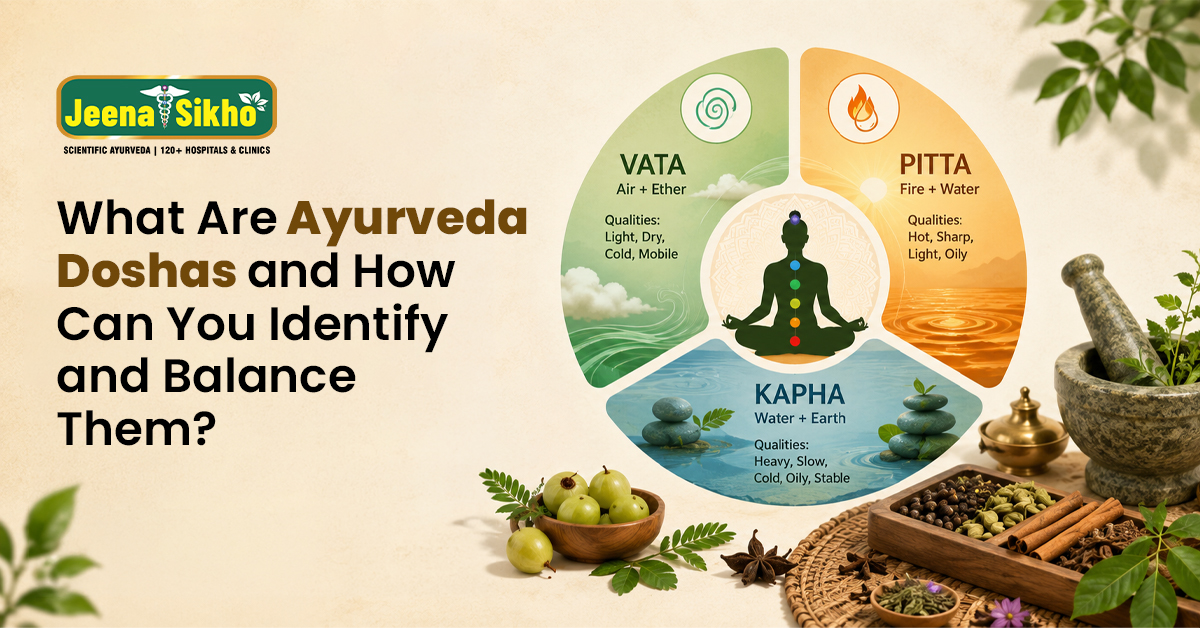
Ayurveda is one of the oldest systems of healing known to man, and lakhs of people across the world still follow it today for a simple reason: it works with the body instead of against it. At the centre of this ancient science lies the concept of Ayurveda doshas, which decide how a person thinks, eats, sleeps, and even falls sick.
Many people are turning back to these old teachings because the modern lifestyle has created new kinds of health problems that were rare a few decades back. Healing With Acharya Manish Ji has been working to bring this traditional knowledge closer to common people so they can understand their own bodies in a better way. This article explains what doshas are, what signs and diseases they can bring when out of balance, and how one can bring them back into balance without complicating the whole process.
What Are Ayurveda Doshas?
In simple words, these are three biological energies present in every human body. They are called Vata, Pitta, and Kapha, and each one controls certain functions of the body and mind. No person has only one dosha working alone; all three exist together, but usually one or two remain more dominant than the other. This dominant combination gives a person their unique nature, both physically and mentally. When these energies stay in their natural proportion, the body remains healthy, but the moment there is a disturbance, small or big, health issues start showing up, and this is why understanding doshas is considered so important in Ayurvedic thinking.
The Three Doshas in Ayurveda
Ayurvedic texts describe the three doshas in Ayurveda as forces made up of the five elements: earth, water, fire, air, and space. Every dosha is a mix of two of these elements, and this combination decides what role it plays inside the body. Understanding Vata, Pitta, and Kapha in some detail makes it much easier to see why one person reacts to weather, food, or stress so differently than another.
Vata
Those born with more of the space and air element carry a Vata constitution. Generally, a Vata person is very thin, more talkative, and restless, with a lower body weight, dry skin, brittle nails, thin hair, and small, slightly sunken eyes. While walking, their joints may even make a sound. They tend to prefer warm weather and often struggle to tolerate cold. Vata governs movement in the body and mind, and sensory impulse, breath, excretion, speech, and blood circulation are some of its main functions.
Signs of Vata imbalance:
- Dryness and roughness of skin
- Excess weight loss or emaciation
- Irregular bowel movement or constipation
- Pain in bones and joints
- Flatulence
- Fear and restlessness
- Abnormal pulse rate
- Palpitation
- Preference for warm surroundings over cold
Pitta
Pitta people are born with hotter constitutions, containing more of the fire element. A Pitta person is generally active, good-looking, a bit of a perfectionist, dynamic, intelligent, and also short-tempered at times. They often have leadership qualities, a moderate build, sharp features, and eyes that carry a slight pinkish tint. Hair loss and early greying are common in this type when things go out of balance. Pitta regulates body heat, digestion, appetite, and the general ability to understand and absorb things, both food and information.
Signs of Pitta imbalance:
- Excessive heat, along with a desire for cold things
- Yellowish coloration of skin
- Giddiness and weakness
- Reduced sleep
- Increased anger and agitation
- Burning sensation in the body
- Excessive thirst and hunger
- Bitter taste in the mouth or bad breath
- Sudden hot flashes
Kapha
Kapha indicates a dominance of water and earth elements. People with this constitution are generally cool, calm, a little lazy, cheerful, and muscular in build. They tend to be the least bothered and happiest type among the three, though if assigned a task, they rarely complete it in time. Other traits include thick hair, big eyes, and skin that stays moist and a little cool to the touch. Kapha keeps the body moist, lubricates the joints, and maintains immunity when it stays in balance.
Signs of Kapha imbalance:
- Drowsiness and lethargy
- Cough or respiratory trouble
- Unusual weight gain
- A sweet taste lingering in the mouth
- Indigestion
- Loss of appetite
- Frequent cold or sinus trouble
- Stiffness or heaviness in joints
What Are the Diseases Caused by Doshas
According to Ayurvedic tradition, when a dosha stays out of balance for a long period, it may eventually contribute towards specific disease patterns in the body. These are described in old texts mainly to explain how prolonged imbalance can affect health, and not as a diagnosis for any individual.
- Vata related disorders: insomnia, headaches, joint stiffness, arthritis, sciatica, neck stiffness, tremors, facial paralysis and chronic constipation are among the conditions traditionally linked with an aggravated Vata.
- Pitta related disorders: acidity, peptic ulcers, skin conditions such as eczema or psoriasis, migraines, acid reflux, conjunctivitis and general inflammation are commonly associated with excess Pitta.
- Kapha related disorders: obesity, sinusitis, bronchitis, respiratory congestion, joint disorders and sluggish digestion are the ones usually linked with Kapha imbalance in Ayurvedic literature.
It is worth remembering that these associations are traditional observations and not a replacement for a proper medical or Ayurvedic diagnosis, since same symptom can arise from very different underlying causes in different people.
Understanding Your Ayurvedic Body Type
Every individual is born with a fixed combination of these energies, which Ayurveda calls Prakriti, or in simpler words, the Ayurvedic Body Type. This gets decided at the time of birth and does not change through life, though the balance of doshas inside the body can shift because of age, season, food habits and stress.
It is worth remembering that body type is not same as body condition; the first one is your natural blueprint, and the second one is what you become because of daily choices you make. Knowing your body type gives a starting point from where correct food, exercise and daily routine can be decided.
How to Identify Your Dosha
Many people ask ‘how to identify your dosha’ without going for expensive tests. Observing daily habits and physical traits over a few weeks can already give a fair idea.
Body frame:
- Vata types are usually slim and light,
- Pitta types are medium built with good muscle tone,
- Kapha types tend to have a heavier, sturdier frame.
Skin and hair:
- Vata skin is often dry,
- Pitta skin can be sensitive or prone to rashes,
- Kapha skin is usually oily and smooth.
Appetite:
- Vata appetite is irregular,
- Pitta appetite is strong and sharp,
- Kapha appetite is slow but steady.
Sleep pattern:
- Vata sleep is light and easily disturbed,
- Pitta sleep is moderate,
- Kapha sleep is deep and long.
Emotional response:
- Vata gets anxious under pressure,
- Pitta gets irritated,
- Kapha stays calm but can turn stubborn.
These signs can help you get a general idea of the body constitution. However, to know the exact dosha combination, it is best to consult an Ayurvedic expert through Healing With Acharya Manish Ji, as self assessment may sometimes be inaccurate.
Why Dosha Balance Matters
Dosha balance is not about making all three energies equal; that is neither possible nor required. It simply means keeping each dosha within the natural limit so none of them becomes too high or too low. When Vata increases beyond its normal range, a person may face joint pain, restlessness or digestive trouble. Excess Pitta can bring acidity, skin problems or anger issues, while extra Kapha often shows up as weight gain, laziness or congestion.
Since Ayurveda doshas control almost every function in the body, keeping them balanced becomes the foundation of good health. This is one reason the science has survived thousands of years without losing it’s relevance even in modern times.
What Are the Remedies for Balancing Doshas
There are simple, practical ways for ‘how to balance doshas naturally’ without depending only on medicines.
For balancing Vata:
- Sleep on time and wake up early, keeping a steady routine
- Eat warm, cooked and slightly oily food
- Favour sweet, sour and salty tastes
- Use warming spices like ginger, black pepper and cumin
- Avoid too much cold food, caffeine and alcohol
- Regular oil massage helps calm the nervous system
For balancing Pitta:
- Include cooling foods like cucumber, coconut water and fresh fruit
- Avoid excess spicy, fried or sour foods
- Stay away from unnecessary arguments and heated situations
- Practice a few minutes of meditation daily to cool the mind
- Spend time near water or greenery whenever possible
For balancing Kapha:
- Prefer light, warm meals over heavy or oily ones
- Stay physically active through the day, avoid daytime naps
- Include spicy, bitter and astringent tastes in the diet
- Practice regular breathing exercises to keep lungs active
- Wake early instead of oversleeping
Herbs, seasonal eating and proper digestion are also given great importance in old Ayurvedic texts, since a weak digestive fire is considered the root cause behind most imbalance in the body. Following such an Ayurvedic Lifestyle with consistency, rather than perfection, tends to bring the most lasting results for overall Ayurvedic wellness.
Conclusion
Ayurveda doshas form the base on which the entire science of Ayurveda stands, and understanding them gives a person a practical tool to manage their own health. Once a person knows whether Vata, Pitta or Kapha is dominant in their body, food, sleep and daily routine can be adjusted accordingly, and most common complaints tends to reduce on their own over time.
Healing With Acharya Manish Ji continues to work in this direction, helping people reconnect with a system of health that has stood the test of time. For those who wish to know their exact dosha type and get a personalised plan, booking a Prakriti Parikshan consultation is a good starting point, as it allows a qualified practitioner to study the individual case closely and suggest steps that suit that particular body and lifestyle. You may book an appointment for Prakriti Parikshan whenever you feel ready to understand your own body in a deeper way.
FAQs
Q1. Can a person have more than one dominant dosha?
Yes. Many people have the combination of two dominant doshas, while some may have a balance of all three.
Q2. Can my dosha change with the age?
Your natural body constitution remains the same, but the balance of your doshas can change because of the age, diet, stress, and lifestyle.
Q3. How can I identify my dosha?
You can observe your body type, appetite, sleep pattern, skin, and emotional tendencies to get an idea of your dominant dosha.
Q4. Is a professional consultation necessary to know my dosha?
Self-observation can help, but an Ayurvedic practitioner can provide a more accurate assessment.
Q5. Why is dosha balance important?
Maintaining dosha balance may help support the natural functions of body and contribute to the better overall well being.