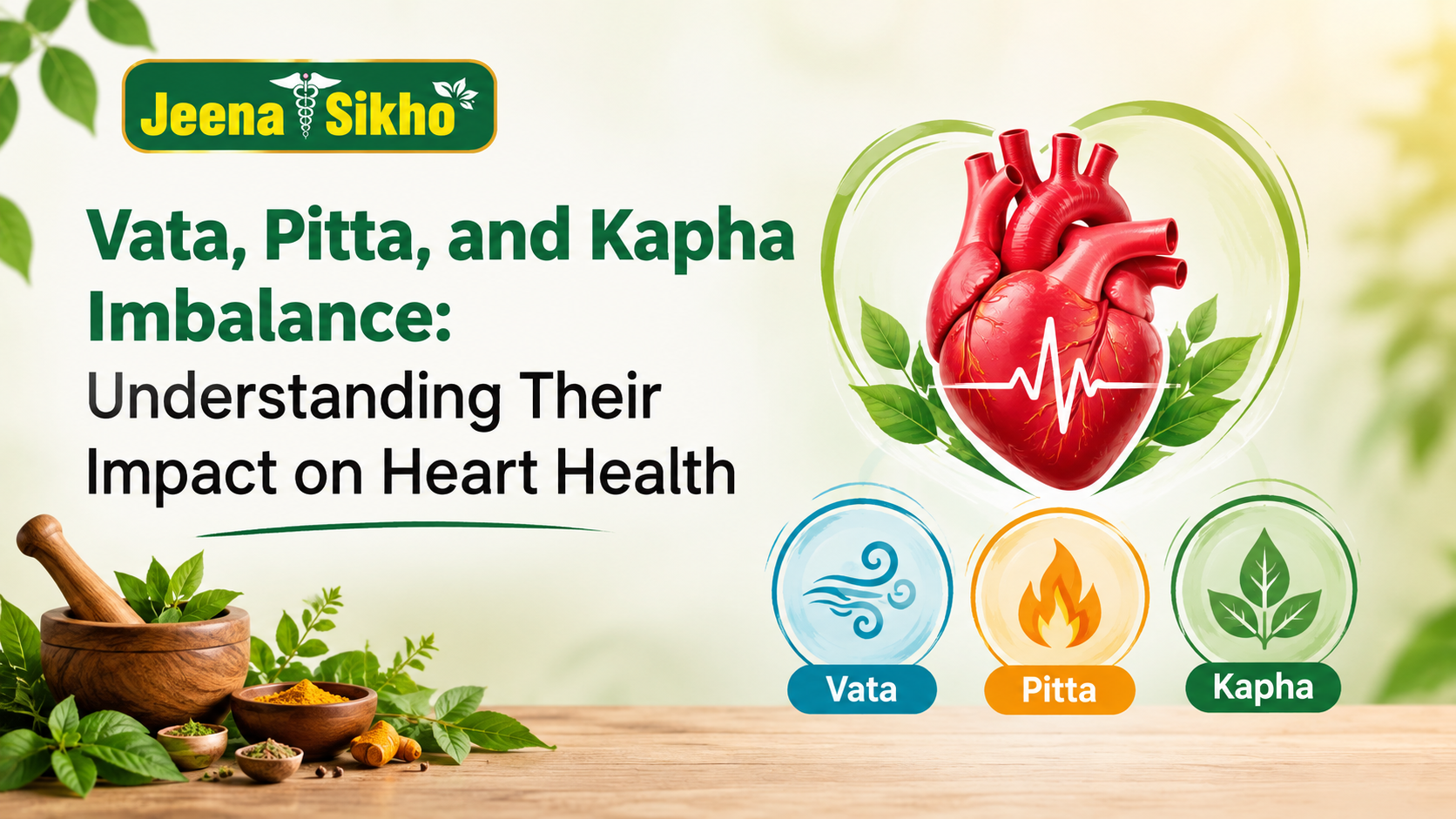

Most people judge heart health by numbers such as cholesterol and blood pressure. But Ayurveda adds another view, based on three energies called doshas. Here Vata, Pitta and Kapha imbalances can shape how the body feels, digests, and responds.
Heart disease is also a major concern in India. In fact, cardiovascular diseases caused 30.9% of all deaths in the country in 2021 to 2023. This comes from Sample Registration Survey data reported by Medical Dialogues.
This blog explains the three doshas and what disturbs them. It then covers the signs of each imbalance and how they relate to the heart. Finally, it shares an Ayurvedic approach to heart health and explains when to see a doctor.
What Are Vata, Pitta and Kapha?
Ayurveda describes the body through three doshas. So each dosha stands for a group of qualities and functions. Everyone has all three, but in different proportions. This natural mix is called Prakriti, and it works like a body blueprint. Imbalance, called Vikriti, is how far the body’s present state has moved away from it.
- Vata is the energy of movement. It guides breathing, circulation, nerve signals, and the movement of food through the gut.
- Pitta is the energy of heat and change. It supports digestion, body temperature and sharp thinking.
- Kapha is the energy of structure and steadiness. It gives the body its strength, moisture and stability.
When the three are in balance, a person feels light, warm and steady. When one or more go out of balance, signs begin to show. So Ayurveda also links the heart to this picture. It places Vyana Vata in the heart, where it helps move blood and nutrient fluid through the body.
Curious which dosha is strongest in you? Speak with our experts for guidance.
Take the First Step – Register Now
What Causes Vata, Pitta and Kapha Imbalance?
Vata, Pitta, and Kapha imbalances rarely come from one thing. Instead, food, routine, and emotions often work together over time. Ayurveda lists several common causes.
What you eat:
Food is important. Dry, cold, or irregular meals, and long gaps between meals, tend to disturb Vata. Very spicy, sour, salty, or fried food tends to disturb Pitta. Heavy, oily, sweet, and cold foods tend to disturb Kapha. Poor digestion and mixing foods that do not suit each other can disturb all three.
Lifestyle factors:
Routine matters too. Too little movement and too much sleep, especially in the day tend to raise Kapha. In addition, overexertion and late nights tend to unsettle Vata. Holding back natural urges such as thirst or the need to pass urine also upsets the balance.
Emotions:
Emotions add to the imbalance. Constant worry and fear tend to disturb Vata while anger and irritation tend to disturb Pitta.
Weak digestion is also a major cause. Ayurveda says that undigested food can turn into Ama, a sticky waste that blocks the body’s channels. It also names Ama as one factor behind heart disorders.
Because these habits build slowly, imbalance often shows up quietly.
How Vata, Pitta and Kapha Imbalance Affect the Heart
Vata, Pitta, and Kapha imbalances do not look the same in everyone. Each dosha has its pattern of signs, both in the body and around the heart. Ayurveda describes these patterns under Hridroga, the Ayurvedic term for heart disorders.
Vata Dosha Imbalance Symptoms
When Vata rises, the body becomes dry, restless, and irregular. Common signs include dry skin, anxiety, poor sleep, gas, constipation, and an uneven appetite. Also, hands and feet may feel cold. Around the heart, Ayurveda describes palpitations and a stretching, pricking, or crushing kind of chest pain. Cold, dry food, skipped meals, stress, and late nights tend to feed this pattern. These signs often rise and fall with stress.
Pitta Dosha Imbalance Symptoms
When Pitta rises, the body runs hot. Signs include acidity, a burning feeling, heavy sweating, irritability, and strong thirst. Skin rashes and loose stools are also common. Around the heart, Ayurveda describes burning chest pain, thirst, a dry mouth, and fatigue. Spicy and fried food, alcohol, anger, and long hours in the heat tend to feed this pattern. However, they often worsen in summer or after heated arguments.
Kapha Dosha Imbalance Symptoms
When Kapha rises, the body slows down. Signs include heaviness, tiredness, weight gain, excess mucus, and slow digestion. Some people also feel sleepy after meals. Around the heart, Ayurveda describes a feeling of heaviness in the chest, nausea, poor appetite, and indigestion. Sweet, oily and cold food, daytime sleep and little exercise tend to feed this pattern. These symptoms also often worsen during the cold, damp months.
Most people do not fit one clean pattern. Instead, two or even all three doshas are often out of balance together. For example, a person may have the heaviness of Kapha and the restlessness of Vata.
When to See a Doctor for Heart Symptoms
Some heart symptoms need expert care first, whatever the dosha. Chest pain, pressure, or tightness and breathlessness all need prompt attention. So do fainting, sudden heavy sweating, and a very fast or uneven heartbeat.
But even milder signs, such as unusual tiredness or swelling in the feet, deserve a check. A doctor can run tests such as an ECG and blood tests. Also, tell your doctor about any herbs or dosha-based routines you follow, so the plan stays safe.
Ayurvedic Approach to Heart Health
Ayurveda focuses on balance. It does not treat every person the same way. Instead, it adjusts food, routine, and calm to the dosha that is most out of balance.
How to Balance Vata for Heart Health
Vata likes warmth, routine, and rest.
- Eat warm meals: Choose freshly cooked food at regular times, and do not skip meals.
- Add a little ghee or healthy oil: Use it in food, as your doctor allows.
- Keep a fixed sleep time: Regular sleep helps settle Vata.
- Practise gentle yoga and slow breathing: Both help calm the mind.
- Try a warm oil massage: It is traditional before a bath.
- Avoid very cold drinks and long fasts.
How to Balance Pitta for Heart Health
Pitta likes coolness and calm.
- Choose cooling foods: Cucumber, coconut water, sweet fruits and green leafy vegetables suit Pitta.
- Cut back on heating foods: Limit chilli, deep-fried food and alcohol.
- Take short breaks: Pause during the day, and avoid heated arguments.
- Walk in cooler hours: Early morning or evening works well.
- Sip water throughout the day: Keep drinking water and do not leave long gaps between meals.
How to Balance Kapha for Heart Health
Kapha likes lightness and movement.
- Choose light, warm meals: Vegetable soups, dals, millets, and steamed vegetables suit Kapha.
- Reduce heavy foods: Avoid sweets, fried food, and cold drinks.
- Move daily: Aim for about 30 minute on most days. A brisk walk works well.
- Avoid sleeping in the day.
- Start the morning with a short walk before breakfast.
Across all three, a few habits help. First, eat at fixed times, finish dinner early, and sleep on time. Keep stress low, because stress unsettles every dosha. These steps are simple, but the right mix differs from person to person.
Personalised Ayurvedic Guidance for Heart Health
Vata Pitta Kapha imbalance looks different in every person. Two people with the same heart concern can need different routines. One may feel restless and dry, and another heavy and slow. So guidance works best when it starts with your own dosha balance, digestion, habits, and reports.
A short talk about your sleep, digestion, energy, and medical history can show which dosha needs attention first. You can learn more about Ayurvedic living at Healing with Acharya Manish and ask for guidance from their experts that suits you.
Conclusion
Vata Pitta Kapha imbalance shapes how the body feels and responds, and the heart is part of that picture. So knowing your signs and habits helps you choose food and routine with more care. Along with regular check-ups, a balanced daily routine supports a healthy heart.
Take the next step toward a balanced routine. Book your Prakriti parikshan with the Healing with Acharya Manish team, and know your dosha. Their experts can help you receive guidance that suits your body and habits.
FAQs
1. What are the signs of Vata Pitta Kapha imbalance?
Vata imbalance shows as dryness, anxiety and gas. Pitta imbalance shows as heat, acidity and irritability. Kapha imbalance shows as heaviness, mucus and weight gain.
2. Which dosha imbalance affects the heart most?
Ayurveda describes heart problems linked to all three doshas. Most people have a mix, so no single dosha is blamed.
3. Can dosha imbalance cause heart disease?
Yes, Ayurveda links some imbalances with heart disorders. Modern medicine ties heart disease to factors such as cholesterol, blood pressure, diabetes and smoking. So see a doctor for any heart symptoms.
4. What foods help balance each dosha?
Warm, cooked meals help Vata, and cooling foods help Pitta. Light, warm foods help Kapha.
5. How can I get personalised Ayurvedic guidance?
You can connect with the Healing with Acharya Manish team through the website. Guidance starts with your own habits and reports.
Disclaimer: The information provided on this blog is for general educational and informational purposes only. It is not intended to replace professional medical advice, diagnosis, or treatment. Always consult a qualified healthcare professional before making any changes to your diet, lifestyle, or treatment plan. Individual results may vary.